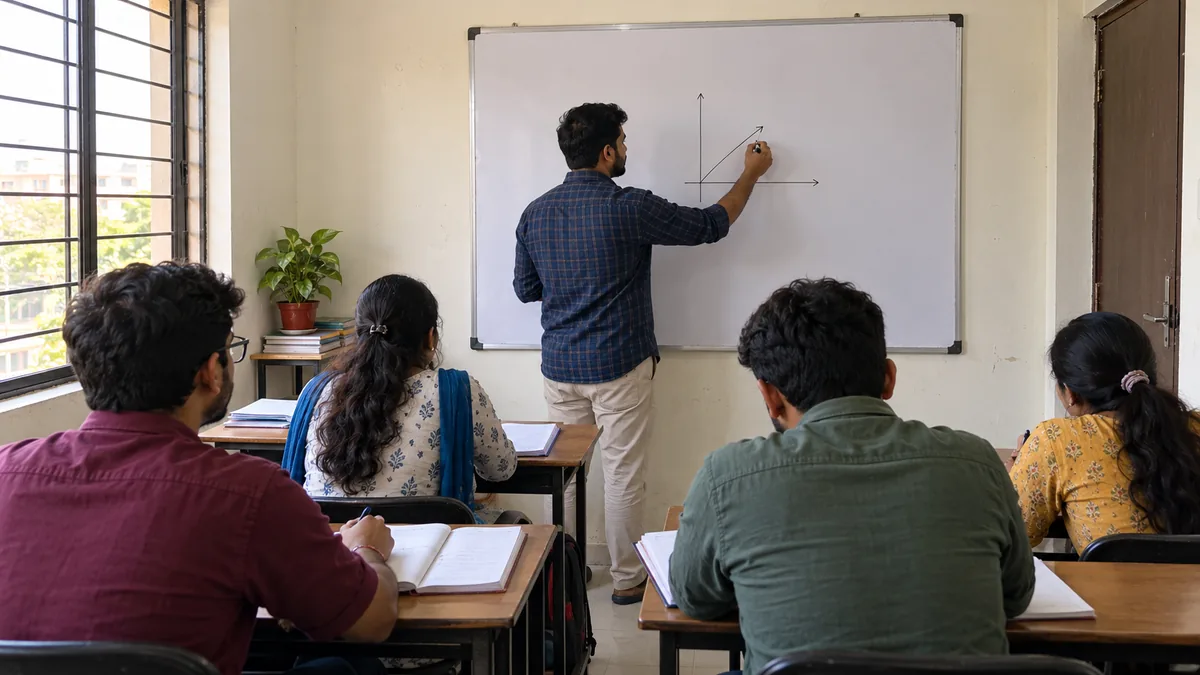
Coaching centre शुरू करने से पहले subject, student segment और teaching capacity तय करें। 2026 में एक छोटे 2-classroom setup का शुरुआती खर्च शहर और deposit के अनुसार लगभग ₹3.5 लाख से ₹8 लाख तक जा सकता है। यह planning range है, किसी vendor का quotation नहीं। Monthly rent, teacher payments और marketing को जोड़कर देखें कि कितने paid students पर खर्च निकलता है। CCPA के 2024 coaching-sector guidelines के अनुसार result, rank, selection या सफलता के दावे प्रमाण सहित और नियमों के मुताबिक होने चाहिए। इसलिए पहले teaching model और truthful communication बनाएं, फिर जगह लें।
किस तरह का coaching centre खोलना ठीक रहेगा?
एक साथ school tuition, competitive exam, spoken English और computer training शुरू करना आकर्षक लगता है, पर हर course के लिए अलग teacher, timetable और material चाहिए। शुरुआत एक स्पष्ट learner group से करें: कक्षा 8-10 का maths, board science, entrance preparation, language skills या job-focused basic computer classes। आपका चुना हुआ विषय ऐसा हो जिसे आप पढ़ा सकें या जिसके लिए भरोसेमंद faculty पहले से उपलब्ध हो।
Course को 8 से 12 हफ्तों के छोटे pilot में चलाएं। पहले demo class लें, parents और learners से उनकी जरूरत समझें और लिखित रूप में syllabus, class days, fee, refund या missed-class policy दें। “Guaranteed selection” या “100% result” जैसे दावे न करें। पिछले परिणाम साझा करने हों तो student की अनुमति, सही cohort, कुल enrolled students और selection की परिभाषा साफ रखें।
2026 में setup के लिए कितना budget रखें?
नीचे का उदाहरण 600-900 वर्गफुट के छोटे urban centre की planning है। किराया, deposit और fit-out location के अनुसार काफी बदलते हैं। जगह final करने से पहले तीन comparable properties देखें और owner से commercial use, signage और class timings की अनुमति लिखित में लें।
| Setup item | अनुमानित रकम | किस बात से बदलेगी |
|---|---|---|
| Deposit और पहला rent | ₹60,000-₹1.8 लाख | शहर, सड़क और lease terms |
| Paint, lights, boards और basic partitions | ₹70,000-₹1.6 लाख | मौजूदा हालत और classroom count |
| Desks, chairs, teacher table | ₹60,000-₹1.2 लाख | capacity और furniture quality |
| Fans, inverter, router और safety equipment | ₹35,000-₹85,000 | बिजली backup और building |
| Registration, stationery और launch material | ₹20,000-₹55,000 | entity, local requirements और print quantity |
| शुरुआती working cash | ₹1-₹2 लाख | खाली seats भरने में लगने वाला समय |
कुल planning range करीब ₹3.45 लाख से ₹8 लाख है। इसमें building purchase, major structural work, lift, air-conditioning, franchise fee या owner की salary शामिल नहीं। Classrooms में ventilation, साफ toilets, drinking water, safe entry-exit और emergency access देखें। Fire safety requirement building use, height, capacity और state/local rules पर निर्भर करती है; landlord की पुरानी NOC को अपने centre की automatic approval न मानें।
Monthly खर्च में कौन-सी चीजें आएंगी?
छोटे centre का fixed खर्च अक्सर rent और faculty से बनता है। उदाहरण के लिए rent ₹30,000, दो part-time teachers ₹36,000, front-desk support ₹15,000, utilities और internet ₹7,000, printing/cleaning ₹5,000 और local marketing/accounting ₹7,000 जोड़ें तो fixed खर्च करीब ₹1 लाख प्रति माह है। यह केवल worked planning example है। Owner खुद पढ़ाता है तो उसकी मेहनत को भी लागत मानें, भले शुरुआत में cash salary न निकले।
हर महीने अलग ledger में rent, payroll, electricity, repair, course material, discounts और refunds लिखें। Admission के समय मिली पूरी fee को उसी दिन की कमाई न समझें। यदि course कई महीनों तक चलता है तो सेवा का कुछ हिस्सा अभी देना बाकी है। Fee का उपयोग rent भरने में करके अगली term की classes चलाने के लिए cash न बचे, ऐसा न हो।
Course fee और break-even कैसे निकालें?
मान लें, एक 3-month batch में 25 students हैं और हर learner से ₹3,600 fee ली जाती है। Batch revenue ₹90,000 होगा। Teacher hours, notes, payment charges और assessment पर ₹22,500 खर्च मानें तो batch contribution ₹67,500 बचता है। अगर centre का monthly fixed cost ₹1 लाख है और हर महीने एक ऐसा batch equivalent शुरू होता है, तो केवल इस course से break-even नहीं होगा। छह active batches की fee अलग-अलग समय पर आती हो, तो cash-flow calendar भी बनाना होगा।
एक महीने का सरल break-even example: औसत monthly realised fee ₹1,200 प्रति active student मानें और books/payment/assessment का variable cost ₹200 हो। प्रति student contribution ₹1,000 है। ₹1,00,000 fixed monthly खर्च ÷ ₹1,000 = 100 active paid students का break-even। Discounts और unpaid instalments के बाद वास्तविक student count इससे अधिक हो सकता है। Course अवधि, fee collection schedule और teacher capacity इस गणित को बदलते हैं।
Fee तय करने के लिए पांच पास के centres का course duration, batch size, teacher access, test frequency और published price देखें। सिर्फ कम price रखकर भराव बढ़ाना sustainable नहीं, अगर teacher time और rent नहीं निकलते। Instalments दें तो due date, late fee policy, cancellation और refund conditions पहले लिखें। Receipts पर paid amount और balance दिखाएं।
जगह चुनते समय किन बातों की जांच करें?
दो या तीन संभावित locations में weekday शाम और weekend पर footfall गिनें। School, college, bus stop और residential colonies के पास होना मदद कर सकता है, लेकिन safe walking route और noise भी मायने रखते हैं। Classroom में आवाज echo न करे, board पीछे की सीट से पढ़ा जाए और गर्मी में हवा का इंतजाम हो। Lease में coaching/educational use स्पष्ट रखें। Society या landlord की written consent और local trade, building, fire या signage requirements संबंधित authority से जांचें।
छात्रों को लाने के लिए केवल hoardings पर निर्भर न रहें। एक open house, sample lesson, local parent groups और accurate Google Business Profile से शुरुआत कर सकते हैं। हर ad में course, duration और fee की जानकारी consistent रखें। CCPA guidance के अनुसार misleading advertisements और unverifiable success claims से बचें। टॉपर की फोटो या नाम लेने से पहले written consent लें।
Registration और student safety के लिए क्या करें?
भारत में coaching centre के लिए एक single national permit को हर राज्य पर लागू मानना ठीक नहीं। State और city के नियम, premises use, Shops and Establishments applicability, local trade permission, fire safety और labour obligations अलग हो सकते हैं। अपने state education department, municipality और building owner से current list लें। Business structure sole proprietorship, partnership या company हो सकता है; PAN, bank account, invoicing और tax treatment उसी के अनुसार सेट करें।
GST registration और fee taxation turnover, supply type, state और applicable exemptions पर निर्भर है। सीमा पार होने की प्रतीक्षा किए बिना CA से business model दिखाकर लिखित advice लें, खासकर जब recorded courses, books या online services भी बेचते हों। Teachers के साथ payment terms, class hours, replacement arrangement और content ownership लिखें।
Minors पढ़ते हों तो pickup authorization, attendance, emergency contact, first aid और complaint handling का सरल process रखें। Student photos, marks और contact details को marketing के लिए इस्तेमाल करने से पहले consent लें। CCTV हो तो उसका उद्देश्य और access policy बताएं। साफ attendance register और incident log operational tool हैं, सिर्फ formal paperwork नहीं।
कौन-से records रोज़ रखने चाहिए?
हर admission पर learner name, course, agreed fee, instalment dates, discount, receipt number और class batch लिखें। रोज़ cash/UPI collection और bank credit मिलाएं। Due list को parent या learner से शांत और निजी तरीके से discuss करें। Teacher payment, rent और tax reserve अलग रखें। Course पूरा होने पर student feedback, attendance और completion का record रखें। किसी result claim का आधार यही documented data बनेगा।
Cash management के लिए admissions pipeline भी लिखें: enquiry, demo booked, attended, admitted या declined. इससे पता चलता है कि कम admissions का कारण low enquiries है या demo के बाद course mismatch। Course renewal को automatic न मानें; term के अंत में learners की progress और अगला level समझाएं। छोटे business loan की तैयारी में EMI और working capital का हिसाब देखें। दुकान के daily entries की आदत के लिए किराना bookkeeping guide पढ़ें।
पहले 90 दिनों का launch plan क्या हो?
पहले दो हफ्ते में course outline, student group, competitor check और budget final करें। अगले दो हफ्तों में location, local permissions, teacher agreements और safety checklist पूरा करें। तीसरे महीने में छोटा pilot batch चलाएं और attendance, completion, parent feedback तथा fee collection देखें। Pilot में कमजोर topic सामने आए तो अगली batch से पहले lesson plan सुधारें। बड़े lease या expensive interiors पर खर्च तभी बढ़ाएं जब paid demand दिखाई दे।
एक सप्ताह का timetable बनाकर peak time की room capacity जांचें। एक ही कमरे में लगातार batches रखने पर सफाई और transition time जोड़ें। Teacher अनुपस्थित हो तो backup plan रखें। Online class को अतिरिक्त सुविधा मानें, लेकिन recording और student data के लिए consent और secure storage रखें।
हर course के लिए seat capacity और teacher utilisation भी निकालें। अगर 30-seat classroom में 12 students हैं, तो rent का बड़ा हिस्सा खाली capacity पर जा रहा है। लेकिन केवल room भरने के लिए batch size इतना न बढ़ाएं कि teacher हर learner को feedback न दे सके। Attendance और test completion को weekly देखें। यदि विद्यार्थी लगातार class miss कर रहे हैं, तो timing, commute या course workload समझें और अगली batch का schedule उसी हिसाब से बदलें।
Fee collection calendar को academic calendar से जोड़ें। Admission fee, instalment और refund का record student-wise रखें, ताकि किसी परिवार को balance की जानकारी बिना बहस के दी जा सके। Teachers को payment date पर भरोसा रहे, इसके लिए payroll reserve अलग रखें।
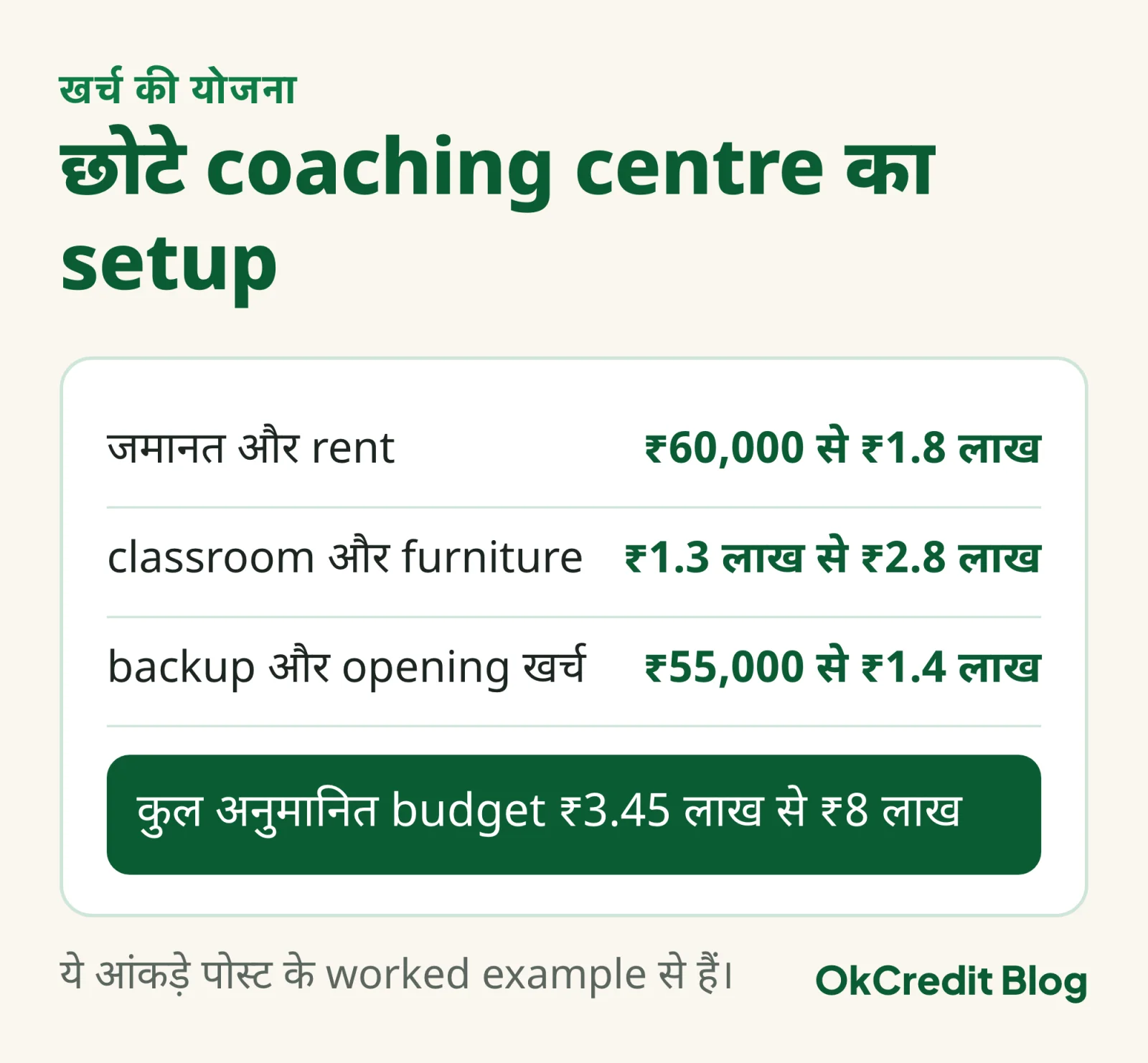
छोटे coaching centre के लिए setup budget के planning ranges।
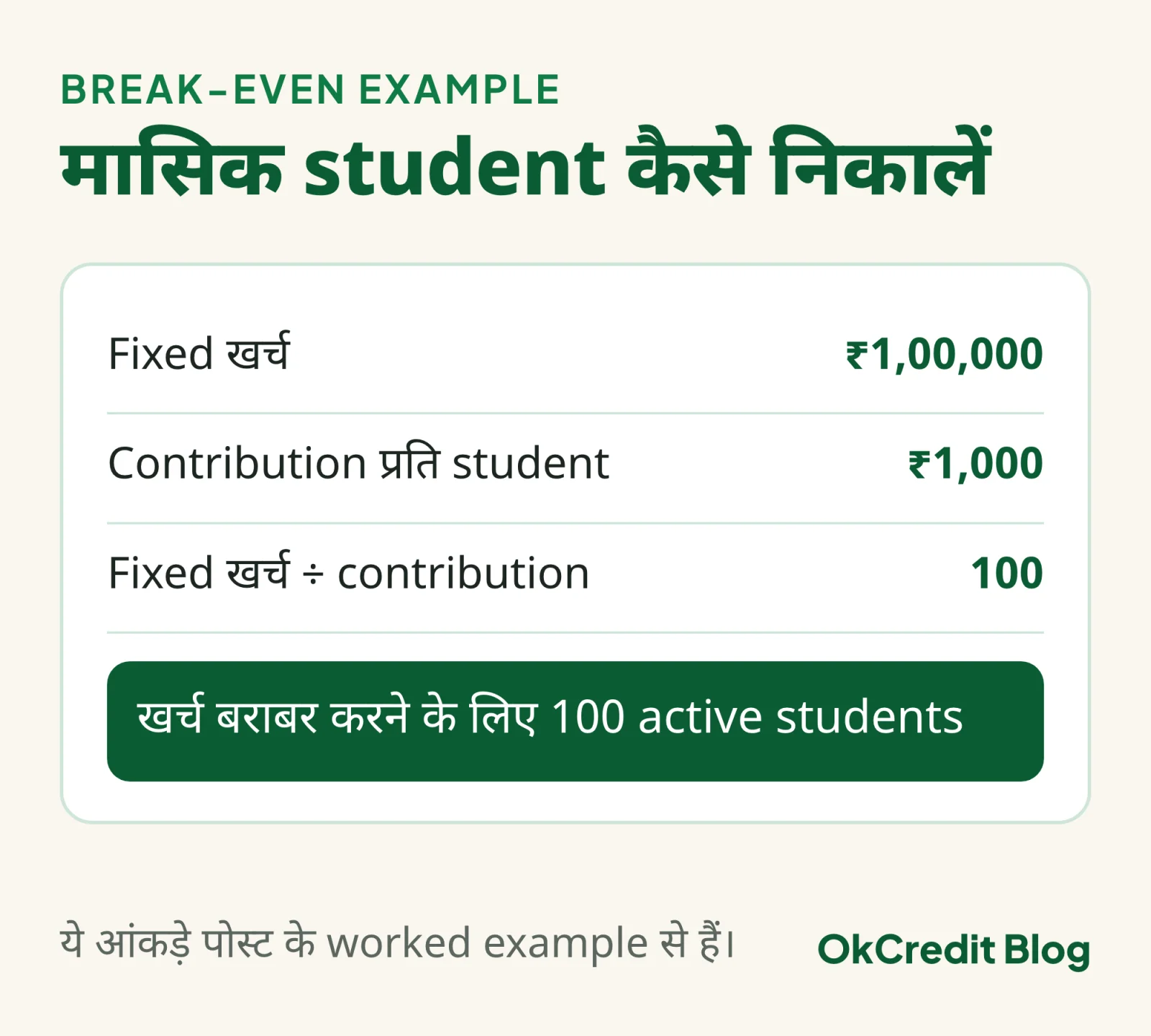
Fixed monthly खर्च को प्रति student contribution से भाग देकर break-even निकालें।
अक्सर पूछे जाने वाले सवाल
Coaching centre खोलने के लिए कितना पैसा चाहिए?
इस लेख का छोटे urban setup example ₹3.45 लाख से ₹8 लाख की planning range देता है। Deposit, renovation, city rent, classroom count और working reserve से वास्तविक रकम बदलती है। तीन local quotes लेकर budget फिर से बनाएं।
क्या coaching centre के लिए एक national licence है?
एक ही permit पूरे देश में लागू मानना सही नहीं। State और city के premises, education, trade, fire और labour rules जांचें। CCPA coaching advertisement guidelines पूरे देश में misleading claims पर लागू हैं।
Break-even के लिए कितने students चाहिए?
Worked example में ₹1 लाख fixed cost और प्रति student ₹1,000 contribution मानकर 100 active paid students चाहिए। आपका fee, discounts और teaching cost अलग होगा, इसलिए अपनी संख्या से दोबारा गणना करें।
क्या result या selection guarantee दे सकते हैं?
ऐसा दावा तभी करें जब वह सत्य, प्रमाणित और नियमों के अनुरूप हो। CCPA की 2024 guidelines coaching ads में misleading claims और material information छिपाने से रोकती हैं। Guaranteed result का वादा न करें।
क्या घर से tuition centre चल सकता है?
यह lease, housing society, permitted use, student movement और local rules पर निर्भर करता है। जगह तय करने से पहले written permission और safety व्यवस्था जांचें।
Student data और फोटो कैसे संभालें?
सिर्फ जरूरत की जानकारी लें, access सीमित रखें और photos, marks या testimonials प्रकाशित करने से पहले consent लें। बच्चों के लिए parent या guardian consent लेना सुरक्षित तरीका है।