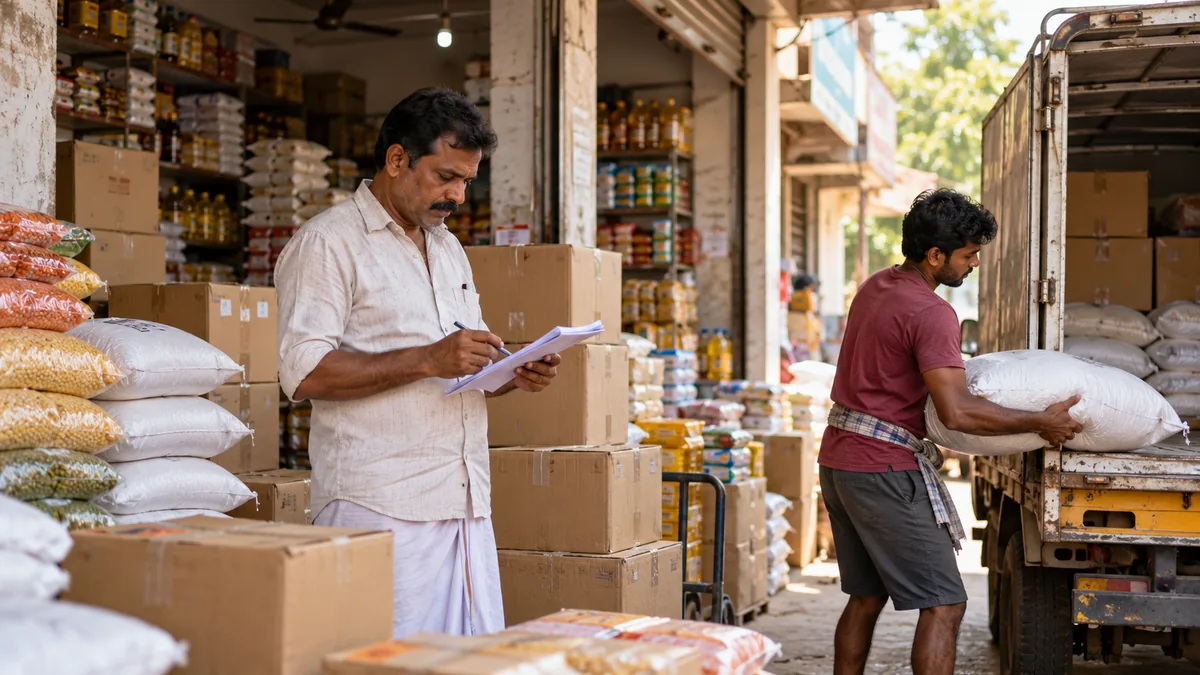
Kirana wholesale business में कमाई कम margin को तेज stock rotation और disciplined collection से जोड़कर आती है। 2026 में एक छोटे neighbourhood distributor को warehouse deposit, racks, delivery व्यवस्था और opening stock के लिए लगभग ₹9.05 लाख से ₹26.55 लाख की planning जरूरत हो सकती है, लेकिन brand range, शहर और credit policy से capital बहुत बदलता है। पहले 20–30 nearby retailers की सूची और उनके weekly purchase pattern समझें। फिर 30-50 fast-moving SKUs से शुरुआत करें; बहुत ज्यादा slow stock और उधार एक साथ लेने से cash फंस सकता है।
Wholesaler और retailer का काम कैसे अलग है?
Retailer रोज़ अंतिम ग्राहक को छोटी quantity बेचता है। Wholesaler manufacturer या authorised distributor से cartons या cases खरीदकर कई दुकानों को supply करता है। आपका काम केवल कम price लेना नहीं: सही invoice, stock rotation, damaged goods claim, timely delivery और retailer collection भी संभालना है। अगर किसी company का authorised distributor बनना हो, तो territory, deposit, target, exclusivity और return policy का written agreement लें। बिना agreement के खुद को authorised seller न बताएं।
शुरुआत में आसपास के general stores, tea stalls, small restaurants और hostels में पूछें कि वे कौन-सी चीजें रोज़ लेते हैं, कौन-सा supplier समय पर नहीं पहुंचता और किस case quantity में माल चाहिए। दुकान की owner consent से छोटा survey करें। Retailer का वास्तविक purchase data, competitor rate और delivery distance आपके product mix की नींव होनी चाहिए, अनुमानित population नहीं।
2026 में setup के लिए कितना पैसा चाहिए?
यह example छोटे city-area wholesaler का है, जिसमें किराये का godown और 30-50 fast-moving grocery SKUs हैं। कोई भी रकम local quotation के बिना final न मानें।
| Setup मद | Planning range | रकम बदलने का कारण |
|---|---|---|
| Deposit और शुरुआती rent | ₹60,000-₹2 लाख | area, loading access और lease |
| Racks, pallets, weighing scale और basic IT | ₹70,000-₹1.8 लाख | godown size और equipment |
| Opening inventory | ₹5-₹15 लाख | category mix, carton MOQ और credit |
| Delivery vehicle/lease और crates | ₹1-₹4 लाख | own vehicle या hired trips |
| Registrations, insurance और launch | ₹25,000-₹75,000 | entity, area और policy cover |
| Working capital buffer | ₹1.5-₹3 लाख | retailer credit days और replenishment |
कुल उदाहरण ₹9.05 लाख से ₹26.55 लाख तक बैठता है। इसमें अपना commercial property, cold chain, tobacco/regulated products, large branded territory deposit या staff expansion शामिल नहीं। यदि आप सिर्फ one-category wholesale करें तो inventory कम हो सकती है, पर retailer को पूरी basket न मिलने पर order frequency प्रभावित हो सकती है।
Margin और break-even का सही हिसाब क्या है?
हर item पर gross margin percentage और rupee contribution अलग लिखें। Illustrative starter example: 20–30 दुकानों को औसतन 10 cartons प्रति दुकान प्रति माह देने पर कुल 200–300 cartons होंगे। यदि हर carton पर ₹5 contribution बचे, तो fixed खर्च से पहले contribution ₹1,000–₹1,500 होगा। यह सिर्फ planning arithmetic है, market margin का दावा नहीं।
अलग category में margin, expiry risk और cash cycle अलग हो सकते हैं। Staple grains का ticket बड़ा और margin कम हो सकता है; packaged snacks का case छोटा मगर expiry और schemes का असर अधिक हो सकता है। Company scheme तभी गिनें जब invoice/credit note में मिली हो, verbal promise पर नहीं। GST input credit को profit न मानें। Retailer credit पर sale कर दी लेकिन collection 30 दिन बाद हो तो आपका working capital उससे पहले भरना पड़ेगा।
किसी एक item पर margin देखकर pricing न तय करें। प्रत्येक invoice line में purchase price, freight-in, scheme credit, GST treatment, damaged stock, delivery cost और actual collected amount मिलाएं। Monthly profit-and-loss में owner salary, bank interest और tax भी दिखाएं। Cash drawer में बची रकम net profit के बराबर नहीं है।
Supplier और product range कैसे चुनें?
पहले products को three lists में रखें: daily essentials, high-frequency impulse goods और locally demanded items. Opening range में ऐसे carton चुनें जो कई shops को बेच सकें। प्रत्येक supplier से invoice, GSTIN, delivery schedule, breakage/expiry return terms और promotional scheme का लिखित proof लें। Unlabelled या suspiciously cheap goods न खरीदें। Packaged food पर FSSAI licence/registration details, batch, best-before, MRP और manufacturer/marketer details जांचें।
Direct manufacturer खरीदने से rate बेहतर हो सकता है, मगर minimum order, territory and payment terms बड़े हो सकते हैं। Local distributor से कम मात्रा और frequent refill मिले, मगर assortment सीमित हो सकता है। दो suppliers का sample invoice और landed cost compare करें। Manufacturer का authorised status उसके official channel से verify करें; किसी व्यक्ति के WhatsApp message को appointment letter न मानें।
Opening stock में short shelf-life products कम रखें। FIFO यानी पहले आया stock पहले बेचें, expiry date को inward entry में दर्ज करें और damaged case अलग रखें। Slow stock पर re-order रोकने का नियम बनाएं। Festive season का extra stock तभी लें जब पिछले sales record या confirmed retailer orders उसका समर्थन करें।
Licence और tax में क्या देखना होगा?
Food products का wholesale storage/distribution food business activity है, इसलिए FSSAI registration/licence classification लागू हो सकती है। FSSAI के 2026 revised turnover thresholds 1 अप्रैल से नए applications के लिए: सामान्य registration ₹1.5 करोड़ तक, State licence ₹1.5 करोड़ से ऊपर और ₹50 करोड़ तक, Central licence ₹50 करोड़ से ऊपर हैं। हालांकि activity, capacity, multiple states, importer/exporter status या अन्य criteria के कारण अलग licence level लागू हो सकता है। FoSCoS eligibility में अपने Kind of Business से सही category चुनें, सिर्फ turnover देखकर निर्णय न लें।
GST registration और tax rate turnover, interstate supply, entity structure और product HSN पर निर्भर हैं। Packaged foods और grocery goods पर एक ही rate नहीं होता। CA से SKU-wise HSN mapping कराएं। Retailer को GST tax invoice या लागू स्थिति में सही bill दें। Company goods की schemes और returns का GST/documentation भी सही ledger में रखें।
Warehouse lease में commercial storage, loading timings, fire safety, pest-control, ventilation और stock insurance की अनुमति जांचें। Local Shops and Establishments, municipal trade, labour, fire या weights-and-measures requirements state/city पर निर्भर हो सकते हैं। Weighing scale trade में इस्तेमाल हो तो Legal Metrology verification और stamping की applicability state controller से confirm करें।
Retailer credit कैसे control करें?
Credit limit हर दुकान के अनुमान पर नहीं, उसके payment history और order size पर तय करें। New retailer से छोटी prepaid order या short credit cycle पर शुरुआत करें। Invoice पर due date और payment method साफ दें। Outstanding list को रोज़ देखें और due से पहले reminder भेजें। यदि retailer एक invoice late करता है, तो बिना review के अगला बड़ा order credit पर न भेजें।
Salesperson की incentive केवल billed value पर न रखें। Collection, returns, stock ageing और repeat retailer activity भी मापें। वरना team turnover बढ़ाने के लिए अधिक उधार दे सकती है। Dispute हो तो retailer की बात और delivery proof दोनों देखें; गलत charge या missing carton को जल्दी resolve करें। Credit notes और discount documentation उसी customer ledger में दर्ज हों।
एक simple daily ledger में opening cash, collection, supplier payment, delivery expense और bank balance reconcile करें। Weekly report में total receivable, overdue amount, inventory value और slow stock शामिल करें। छोटे दुकानदार की bookkeeping guide देखें और business loan के लिए तैयारी में working capital cycle समझें।
पहले तीन महीने की शुरुआत कैसे करें?
पहले महीने में retailer map, supplier quotes, entity/bank setup, warehouse safety और 30-50 SKU list पूरी करें। दूसरे महीने में सीमित stock के साथ 20-30 दुकानों को service करें और delivery route का वास्तविक समय मापें। तीसरे महीने में reorder data, expiry, claims, collection days और contribution per route देखें। मांग साबित होने पर range बढ़ाएं।
हर delivery पर billed quantity और received quantity का proof रखें। Returns उसी दिन note करें। Driver को cash collection सौंपें तो receipt और deposit process स्पष्ट हो। Warehouse access सीमित रखें; high-value stock का periodic physical count करें। Month-end stock ledger और actual shelf stock का अंतर investigate करें।
Retailer से service feedback लें, लेकिन केवल discount मांग को demand न समझें। पूछें कौन-सा item अक्सर खत्म होता है, कितनी बार delivery उपयोगी होगी और किस order size पर transport cost निकलती है। फिर routes को area clusters में बांटें। हर दिन दूर-दूर के छोटे orders करने से fuel और staff time contribution खा सकता है।
Warehouse layout में receiving, quarantine, saleable stock, returns और dispatch के अलग zones बनाएं। Food cartons को floor पर सीधे न रखें और pest-control service की visit date लिखें। Cleaning chemicals और consumable food stock को अलग रखें। Monsoon में roof leaks और damp walls की जांच करें। Expiry या damaged stock को saleable quantity से अलग दर्ज करने पर stock report और retailer invoice में mismatch कम होगा।
एक route में delivery stops तय करने से पहले unloading time, parking, traffic restrictions और retailer opening hours note करें। हर दिन अधिक orders लेना जरूरी नहीं, अगर दूर-दूर के stops के कारण fuel और driver time बढ़ रहा हो। Route-wise contribution निकालें और minimum order value या delivery day तय करने की जरूरत देखें।
Credit risk को ledger में retailer-wise रखें। एक दुकान का overdue दूसरे customer की समय पर payment से छिपना नहीं चाहिए। Supplier को देने वाली रकम, retailer से आने वाली रकम और bank overdraft अलग columns में रखें। हर सप्ताह oldest overdue invoices पर action लें। यदि लगातार देर हो रही है, तो credit days कम करें या prepaid delivery पर लौटें।
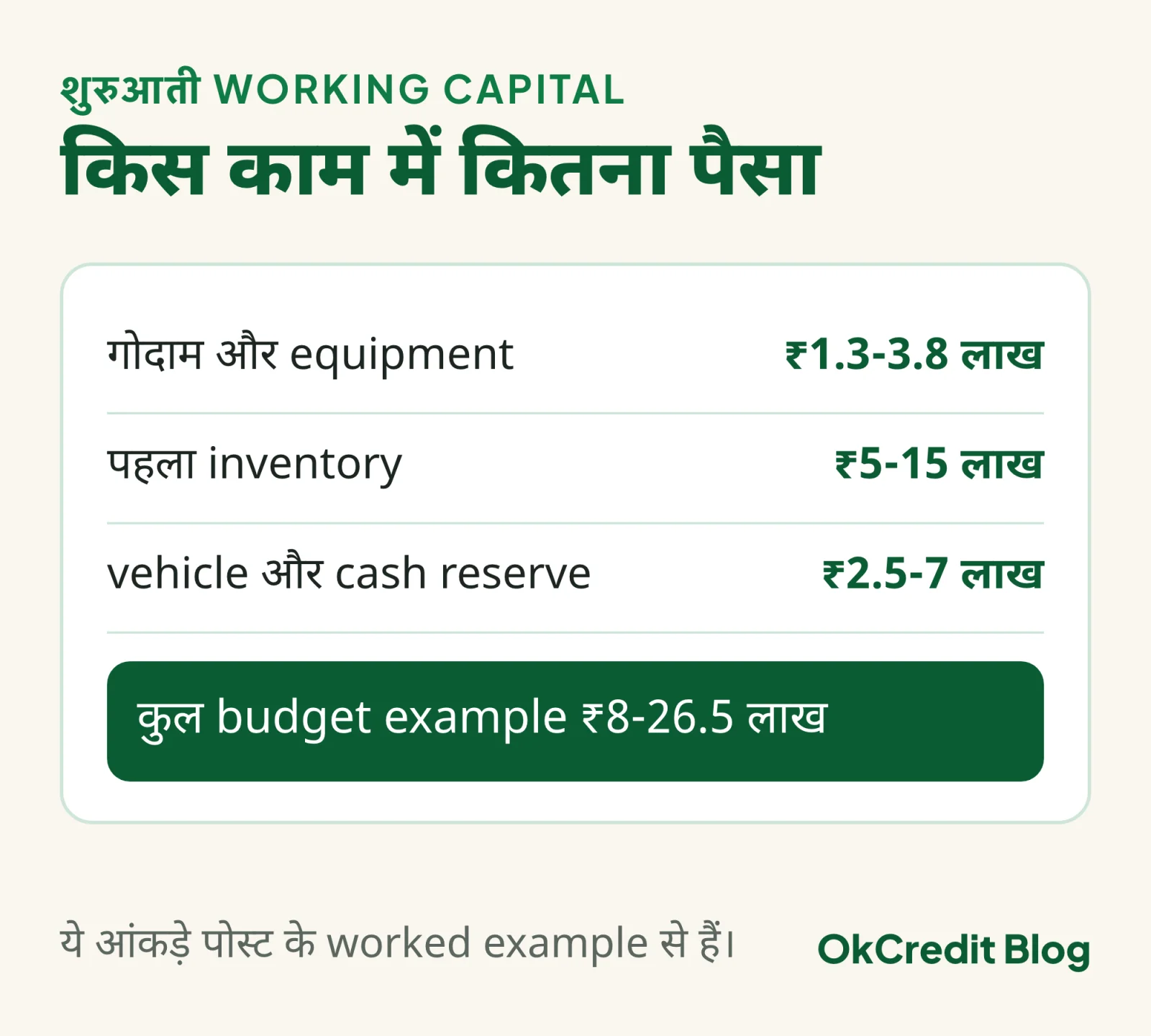
एक छोटे kirana wholesaler के opening budget का illustrative split।
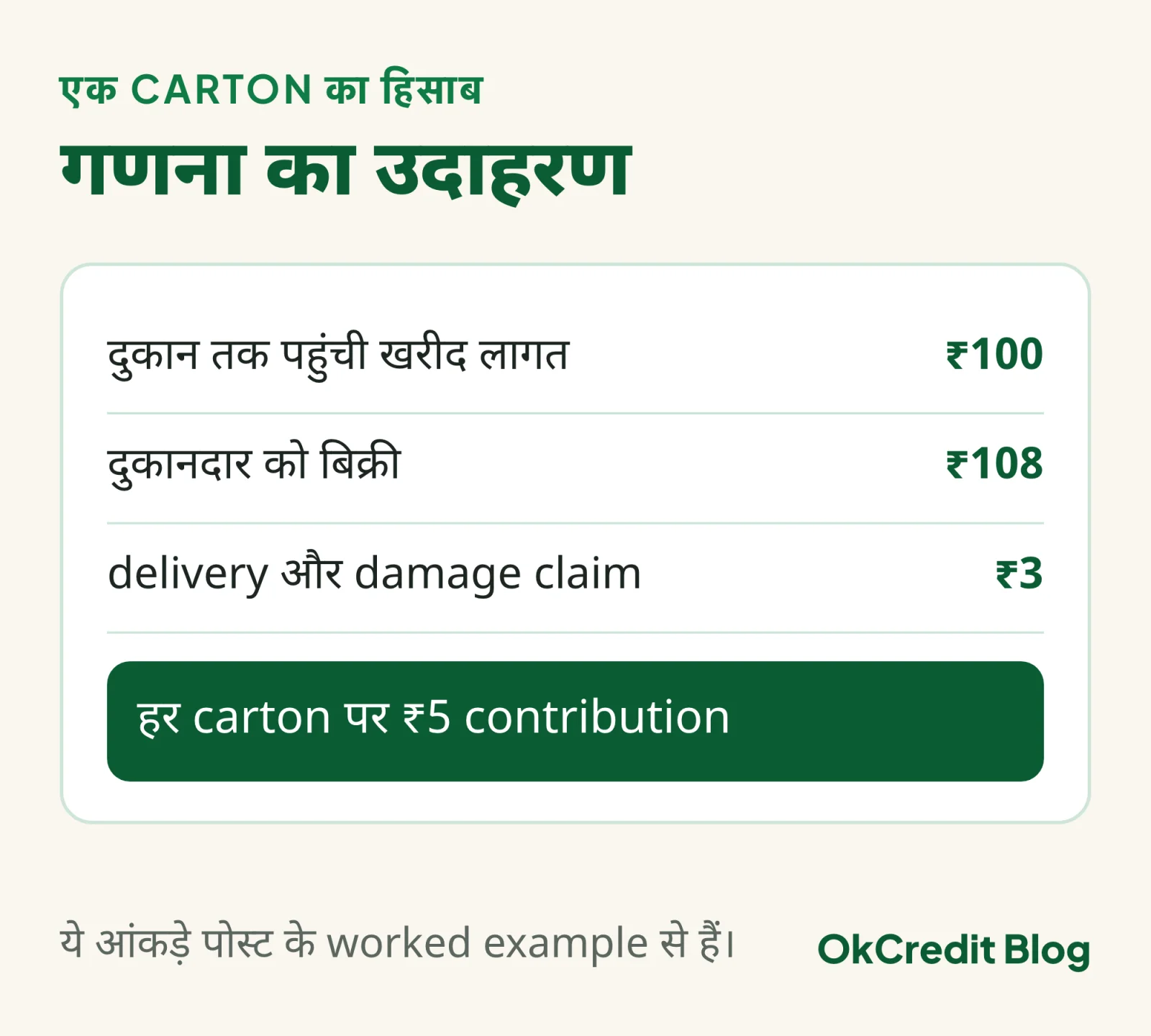
Carton पर खर्च और delivery के बाद बचा contribution।
अक्सर पूछे जाने वाले सवाल
Kirana wholesale business के लिए कितनी investment चाहिए?
इस छोटे rented-godown example में ₹9.05 लाख से ₹26.55 लाख का planning range है। मुख्य रकम inventory और working capital में जाती है। Product mix, supplier terms, city rent और delivery model से वास्तविक बजट बदलेगा।
Wholesaler का margin कितना होता है?
कोई एक universal margin नहीं। Brand, category, scheme, freight, expiry, damaged returns और credit days इसे बदलते हैं। हर SKU का landed cost और collection-adjusted contribution निकालें।
क्या food wholesaler को FSSAI licence चाहिए?
Food wholesaling/storage एक regulated food business activity है। 2026 turnover thresholds अपडेट हुए हैं, लेकिन सही registration/licence activity और FoSCoS Kind of Business पर निर्भर है। आवेदन से पहले current eligibility जांचें।
क्या शुरुआत में retailers को उधार देना चाहिए?
छोटी, documented limit और तय due date के साथ ही। New retailer का payment pattern देखें। Overdue account पर अगला बड़ा credit order रोकना cash loss कम कर सकता है।
कौन-सा stock पहले रखें?
पास के दुकानदारों के purchase pattern से fast-moving SKUs चुनें। कम shelf-life और बड़ी carton quantity वाले items सीमित रखें। Sales, returns और expiry record के आधार पर range बढ़ाएं।
क्या सभी grocery items पर GST rate एक जैसा है?
नहीं। Product classification, packaging, brand status और applicable GST notifications के आधार पर rate बदल सकता है। SKU-wise HSN mapping के लिए tax professional से पुष्टि करें।