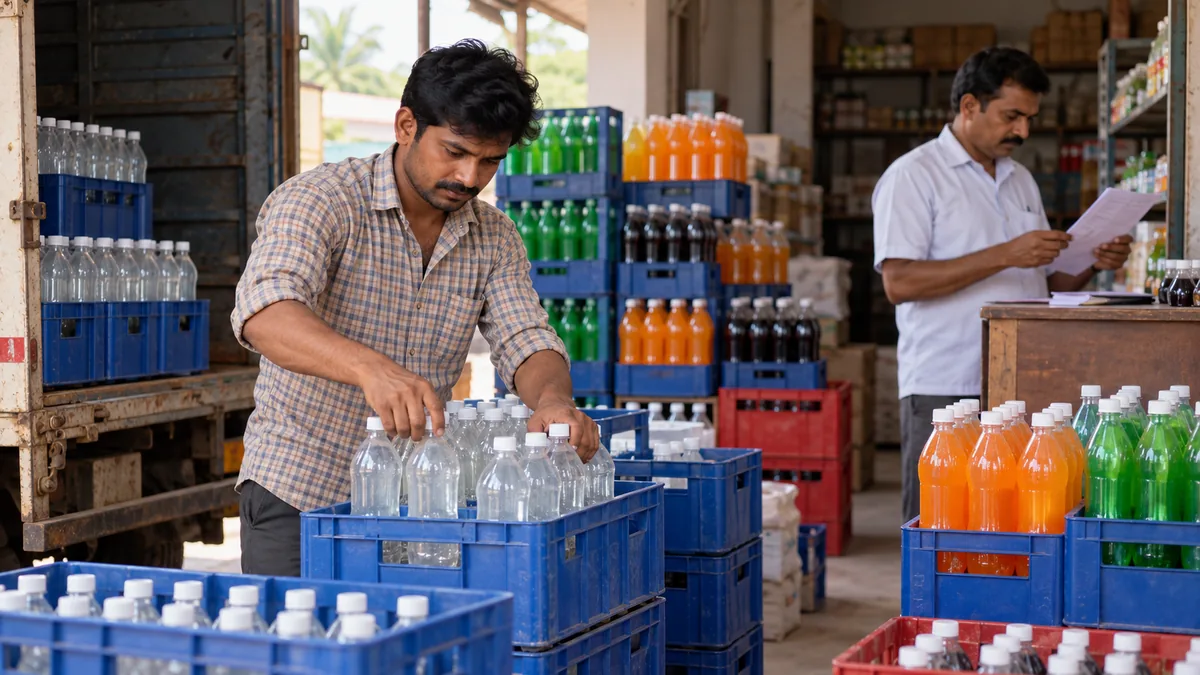
A soft-drink agency is a route-distribution business. Its cash is tied up in crates, vehicle capacity, retailer credit and seasonal stock as much as in the product itself. Before approaching a beverage company, map the route, estimate the number of active outlets and ask what territory, storage, cooler and payment terms are actually available. Do not assume a public brand enquiry guarantees a distributorship.
Which distribution model are you considering?
A stockist buys product and supplies retailers; a sub-distributor may collect from a larger depot and serve a smaller area; an institutional supplier sells to restaurants, caterers or canteens. Company terms, territory and required investment differ. Some brands supply display coolers under conditions, while others expect a retailer or distributor to arrange equipment. Get every asset, security deposit and sales target in writing.
Route density matters. Twenty outlets within one compact market can cost less to serve than the same twenty spread across a district. Count kirana shops, restaurants, dhabas, canteens, cinemas, bus stops and event venues separately. Ask each outlet which pack sizes they sell, how frequently they reorder and what credit period they expect. A shop selling only one crate a week may not support a long delivery route.
What should the startup budget include?
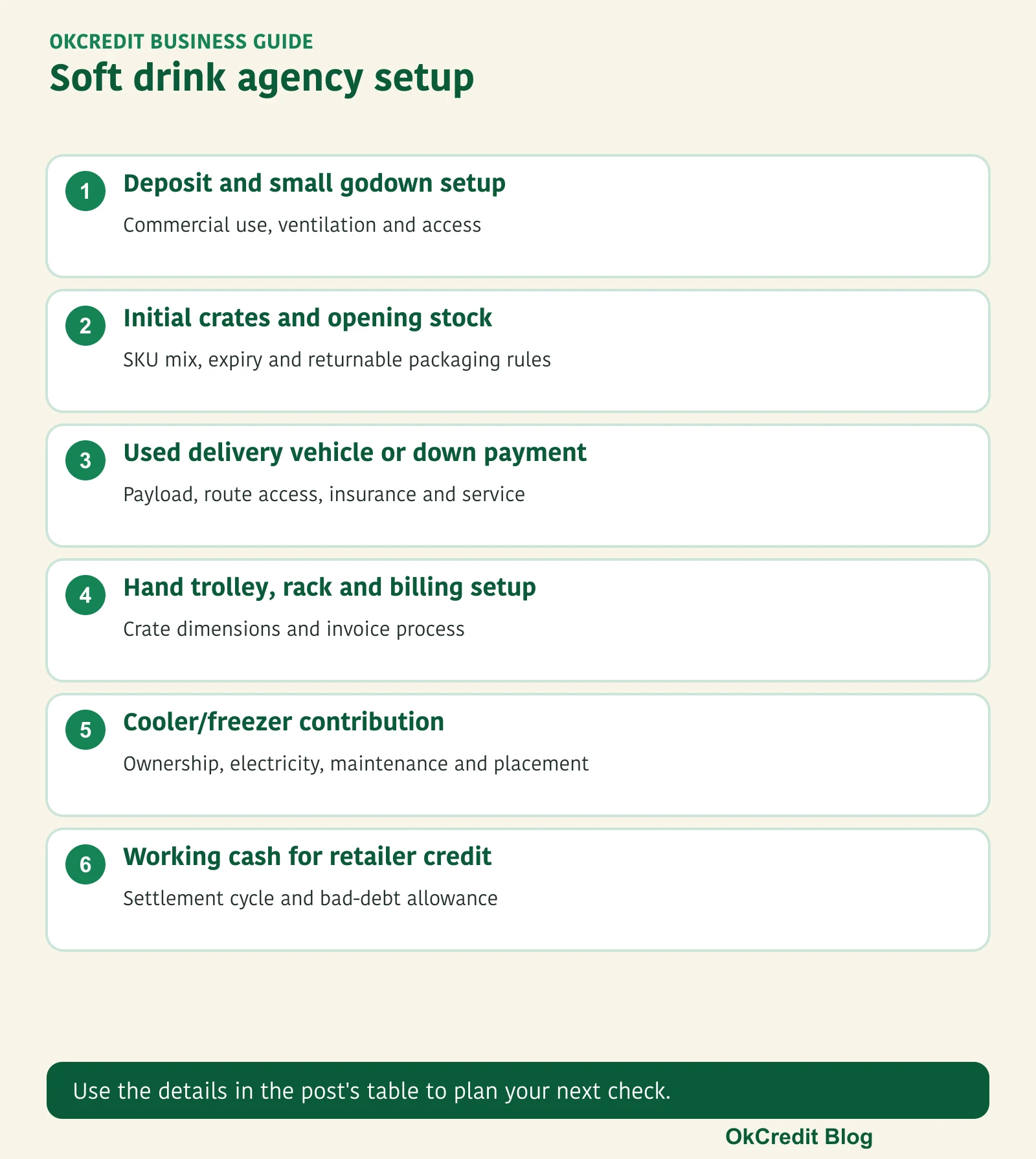
The following is a small-city planning worksheet, not a company tariff. Vehicle purchase, commercial permit and cold-room installation can add materially. Confirm distributor security deposit and territory-specific stock requirement directly with the brand.
| Setup item | Planning range | What to confirm |
|---|---|---|
| Deposit and small godown setup | ₹60,000–₹2 lakh | Commercial use, ventilation and access |
| Initial crates and opening stock | ₹1.5–₹5 lakh | SKU mix, expiry and returnable packaging rules |
| Used delivery vehicle or down payment | ₹1.5–₹6 lakh | Payload, route access, insurance and service |
| Hand trolley, rack and billing setup | ₹25,000–₹90,000 | Crate dimensions and invoice process |
| Cooler/freezer contribution | Company quote | Ownership, electricity, maintenance and placement |
| Working cash for retailer credit | ₹1–₹4 lakh | Settlement cycle and bad-debt allowance |
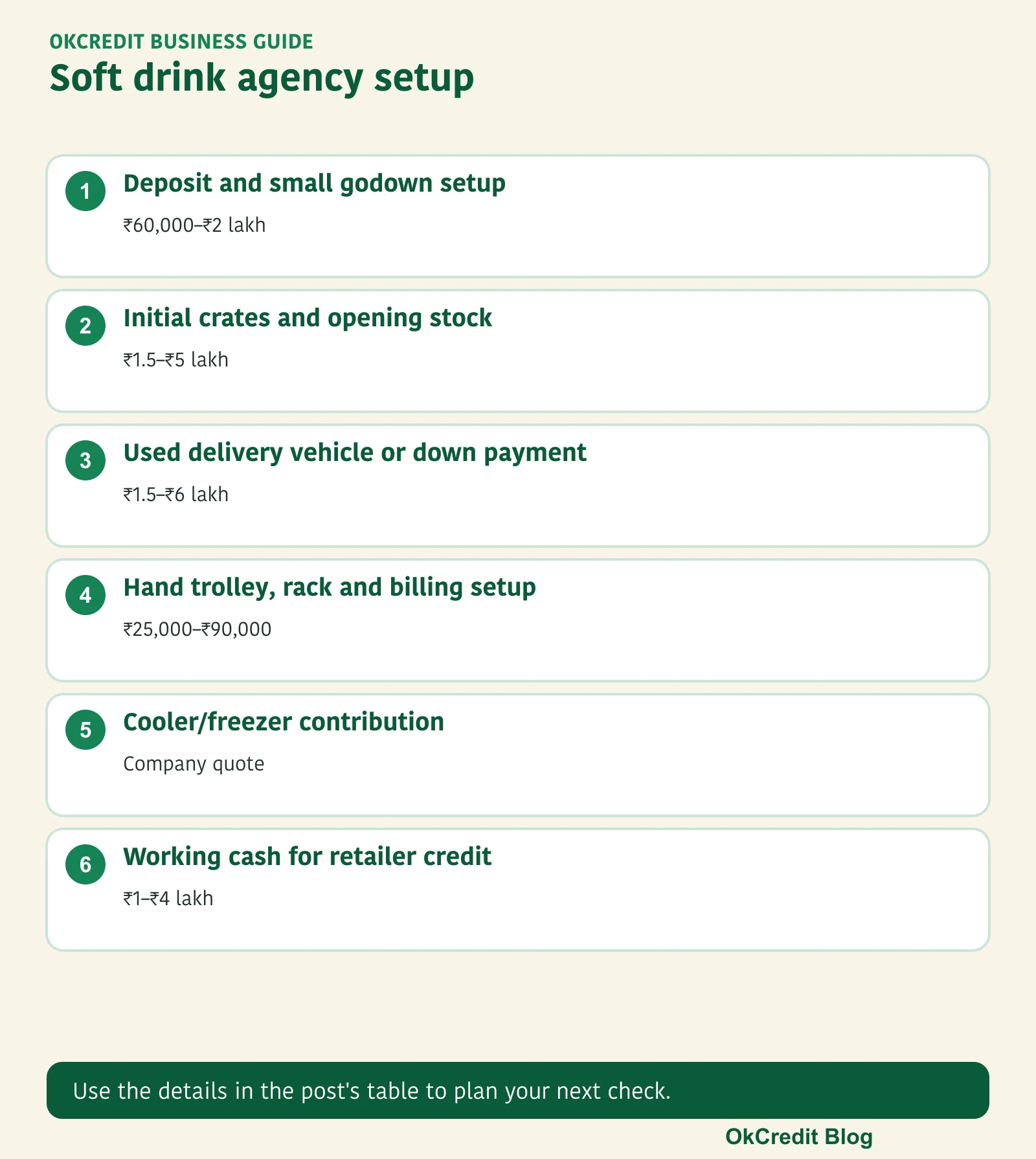
Setup items and planning ranges from the table.
Check route, stock returns and retailer payment cycle.
Use separate inventory counts for returnable glass bottles, PET packs, cans and crate deposits. Do not treat refundable packaging deposits as sales income. Take a signed crate count when delivering and collect empties with a receipt. Lost crates and damaged bottles can quietly consume margin.
What monthly costs arrive on a delivery route?
Fuel, driver/helper wages, vehicle upkeep, godown rent, loading time, phone/data, breakage, expired stock and collection time sit alongside inventory purchase. Add summer peak and monsoon slowdown as separate scenarios. A vehicle that is full for outbound delivery but returns empty may have a different cost per drop than one collecting empties and servicing both sides of a route.
Record kilometres, litres of fuel, stops served, crates delivered, returns collected and cash received each day. Route profitability is not simply delivery value divided by shops. If a customer waits 40 minutes for the truck, that time is a real service cost. A late route also risks warm product or missed outlet hours.
What is the unit economics for one crate?
Brand agreements determine purchase price, retailer price, schemes, discount and distributor margin. Those terms are not universal and may change by SKU, season or territory. Request a dated price list and written scheme calculation. Verify whether a scheme is a credit note, free goods or an upfront discount; each changes stock valuation differently.
Worked example only: suppose a crate costs the agency ₹400 and is invoiced to a retailer for ₹440. A ₹15 delivery/handling allocation and ₹5 damage/shortage reserve leave ₹20 contribution per crate. If fixed monthly route cost is ₹60,000, the route must sell 3,000 crates at that contribution to cover it. Use your agreement’s actual amounts; if scheme credit is delayed, do not count it as same-day cash.
A retailer may ask for 7-day credit, while your company requires weekly payment. That gap needs working capital. Put the credit limit and due date on each outlet account. Pause new supplies when an older invoice is overdue or disputed. The agency can show strong sales yet miss its company payment if collections are not reconciled every evening.
How should you approach beverage companies?
Use the brand’s current official contact or distribution enquiry page. Ask for the available district/route, opening stock, deposit, cooler terms, minimum monthly volume, price-list validity, retailer schemes, expiry/damage claim process, invoice days, territory boundary and termination terms. Avoid paying a broker who says a territory is “reserved” without written confirmation from the company.
A valid appointment document should name the legal entity, territory, products, effective date and authorised signatory. Confirm the bank beneficiary against the company’s official contact. Never use a brand’s logo to advertise yourself as its distributor before appointment. A brand may appoint one agency for one pack category and another for a different channel; ask rather than assuming exclusivity.
What storage and food-safety duties should you plan?
Check product label storage instructions. Not every soft drink needs refrigeration in the warehouse, but retailers may expect chilled supply and display. Maintain a clean, dry and ventilated storage area, keep cartons off damp floors, rotate by batch/expiry and separate damaged packages. Coolers need electrical safety, cleaning and a written asset-maintenance process.
An agency that only distributes packaged drinks should still confirm its applicable FSSAI food-business activity and licence/registration on FoSCoS, plus local trade and GST obligations. FSSAI’s revised turnover thresholds began 1 April 2026: registration up to ₹1.5 crore, State licence above that through ₹50 crore and Central licence above ₹50 crore, subject to activity-based eligibility. Verify the exact distributor/wholesaler category instead of relying on a threshold summary.
How do you select a profitable route?
Build a paper route with outlets grouped by market and opening hours. Estimate stop time, unloading, empty-crate collection, parking and return distance. Run a one-week demand survey before purchasing a vehicle. Ask stores for actual weekly movement rather than their best-case festival order. Compare an institutional route with a neighbourhood route; one large canteen could represent high volume but also concentrated payment risk.
Start with a manageable SKU mix. Too many flavours and pack sizes create slow inventory and picking errors. Use a minimum order rule by route and publish the delivery days. If a shop requests an emergency drop, charge for the extra trip or schedule it with the next run. The agency’s product range can expand after repeat orders show the data, not before.
Which records protect cash and stock?
At delivery, record invoice number, outlet, SKU, quantity, crate deposit, returnable empties, discount, cash collected and due date. Reconcile vehicle stock before departure and after return. Short delivery claims should be logged the same day with photo and signed slip. Keep the company statement and your retailer ledger separate; a scheme credit from the principal does not automatically clear a retailer’s unpaid invoice.
Use an ageing report for both stock and receivables. Mark products nearing expiry and raise a claim within the company’s stated window. Track cash collected per route, not just bills generated. If you sell on credit, a digital ledger for customer dues can complement the agency’s stock software. See GST invoice basics for document checks.
Frequently asked questions
How much does a soft-drink distributorship cost?
The brand, area, vehicle, opening stock, cooler policy and credit terms determine investment. Ask the company for a current territory quotation before paying a deposit.
Does a beverage company provide a free cooler?
Terms vary. Confirm who owns the cooler, what sales conditions apply, who pays electricity, who repairs it and whether you can move it between outlets.
Can I distribute multiple brands?
Check each appointment’s exclusivity, product category and territory clauses. Do not assume a contract permits a competing brand in the same outlet or route.
How do I reduce expired stock?
Order against recorded outlet demand, rotate stock by expiry, review slow SKUs weekly and ask the principal about documented expiry-return rules.
What matters more, retailer count or route size?
Neither number alone. Compare contribution per drop with mileage, loading, collection time, empty-crate return and the outlet’s payment reliability.