A neighbourhood sweet shop can make mithai in-house, buy from a licensed manufacturer or combine both. Your first decision affects food-safety responsibilities, equipment, staffing, shelf life and cash tied up in ingredients. A small counter with a short menu is easier to cost than a full mithai kitchen. Before signing a lease, estimate each product’s saleable yield, wastage and daily demand in the exact catchment.
Which sweet-shop model fits your skill and location?
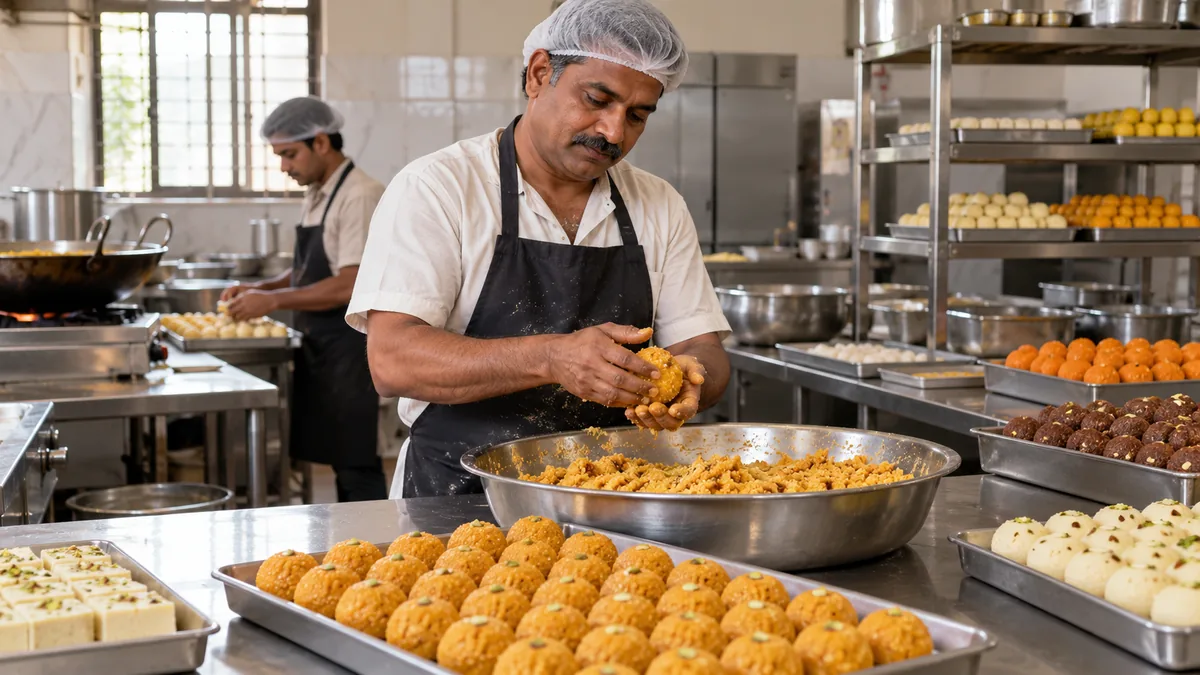
A resale counter needs supplier reliability, cold storage for selected products and enough range to earn repeat visits. An in-house kitchen gives control over recipe and freshness, but requires production space, trained staff, cleaning routines, water, ventilation and a process for batch records. A mixed model can start with sealed or traceable products from a supplier and a few made-to-order items. Do not advertise a product as “made fresh here” when it is delivered from elsewhere.
The buyer pattern differs by location. Near a temple, customers may seek small prasad portions and early opening. Near offices, packaged sweets and afternoon snacks can move faster. A residential market can carry family packs and preorders for birthdays. Observe nearby sweet shops at morning, evening and one weekend period; note which trays sell through and what remains at closing. A crowd during one festival is not a year-round sales forecast.
What should the setup budget include?
The table is a planning model for a small rented counter with limited production or finishing. These are not published 2026 price quotations. City, lease deposit, equipment grade, refrigeration load and civil work change the actual cost. Collect three written estimates and confirm electrical load before paying an advance.
| Setup item | Planning range | Question for the vendor |
|---|---|---|
| Shop deposit and first rent | ₹60,000–₹2.5 lakh | Is food preparation allowed at this address? |
| Counter, washable surfaces and storage | ₹70,000–₹2 lakh | Which material is food-safe and easy to clean? |
| Refrigerator/display chiller | ₹45,000–₹1.5 lakh | What temperature range and service support are included? |
| Kadai, burner, utensils and weighing scale | ₹55,000–₹1.8 lakh | Is installation and calibration included? |
| Initial ingredients, packaging and trays | ₹40,000–₹1.3 lakh | What is the minimum order and expiry? |
| Working cash for wages and replenishment | ₹1–₹2.5 lakh | How many weeks of slow sales can this cover? |
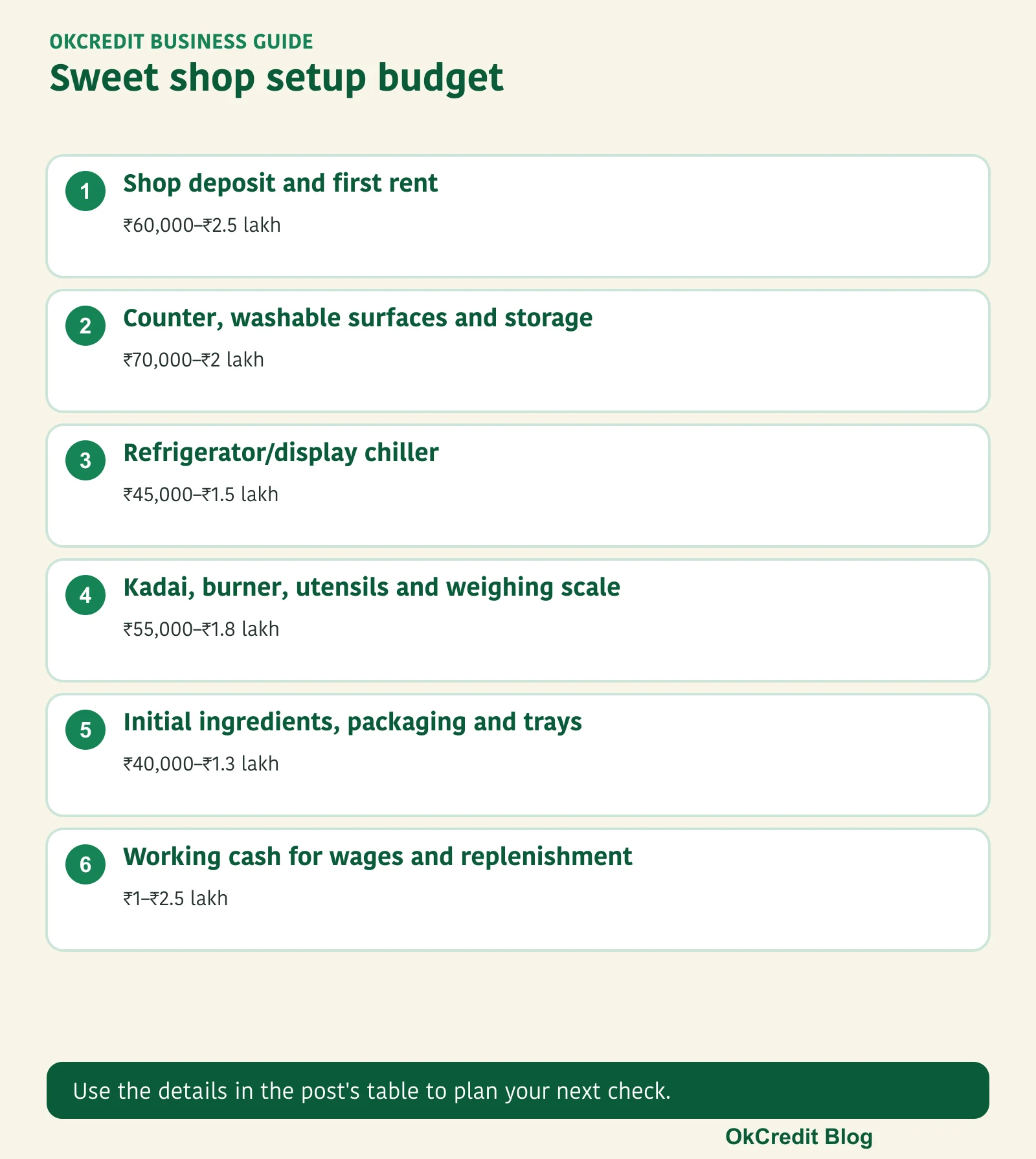
Setup items and planning ranges from the table.
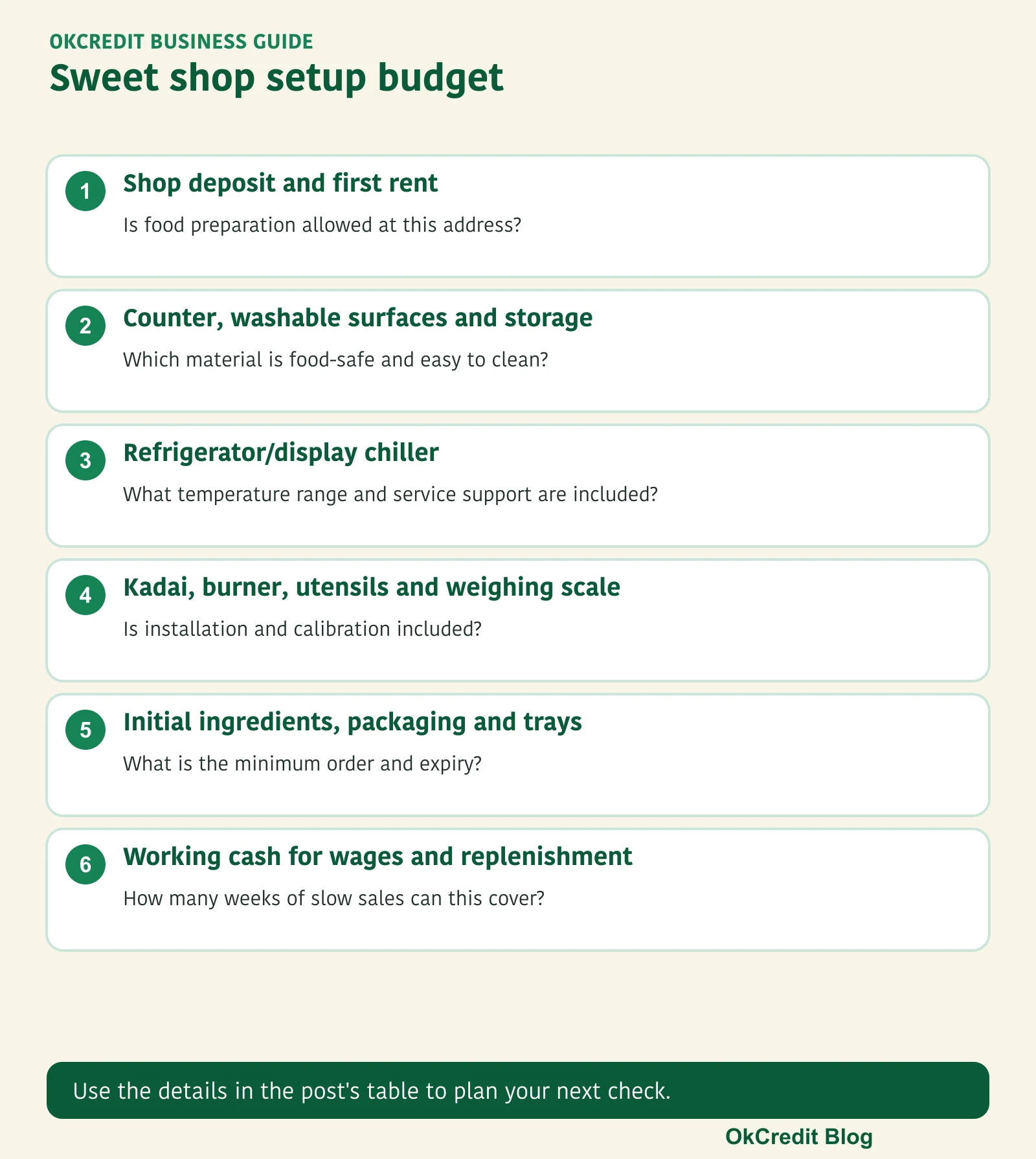
Confirm food-safe equipment, stock and working cash.
A kitchen making khoya, chhena or fried sweets needs a different layout and cooling plan from a shop selling sealed branded packs. Add exhaust, drainage, handwashing sink, food-grade bins, pest-proof storage and an accessible cleaning area to your quotation. If you use a shared kitchen, check whether its licence and agreement cover your operator and menu.
What monthly costs will arrive before the first festival order?
Rent, cook and helper wages, electricity, LPG or other fuel, milk and ghee purchases, packaging, cleaning, pest control, delivery and card or marketplace fees recur. Some ingredients have volatile purchase prices. Note actual invoice prices by date rather than carrying last season’s figure into this season. Keep a separate owner salary line; an owner working every day without pay can make a weak business look profitable.
Waste has several sources: excess batch production, broken pieces, unsold display items, sampling, heat damage and returns. Record each separately. A tray sold at a discount still consumes ingredients; an item thrown away has zero sales but retains its direct cost. Use smaller batches and make the next production plan from yesterday’s sell-through, not from the appearance of a full display.
How do you calculate the margin on one mithai box?
Consider a worked example, not a market price: a 500 g box sells for ₹360. Ingredients cost ₹190 after including the measured yield, food-grade box and label cost ₹22, and payment/delivery support costs ₹18. The contribution before rent and wages is ₹130. If fixed monthly cost is ₹1.3 lakh, break-even volume is ₹1,30,000 divided by ₹130, or 1,000 boxes a month, about 34 boxes a day over 30 days. The example assumes the shop collects full price and sells the entire production.
If festival discounts reduce the realised price to ₹330 while other direct cost stays at ₹230, contribution falls to ₹100 and monthly break-even moves to 1,300 boxes. The shop must not confuse gross margin with net profit: rent, staff, electricity, cleaning, equipment repair, taxes and owner compensation still need to be paid. Replace every example amount with current supplier invoices, observed waste and actual customer receipts.
Price by product and pack size. A single “mithai margin” hides that peda, kaju katli, milk cake and dry sweets have different ingredient mix, labour time, shelf life and wastage. If you cannot weigh a batch input and saleable output, the cost per kilo is guesswork. Keep a recipe card with ingredient quantities and expected yield; compare it to the finished batch after cooling.
Which FSSAI and local checks should you complete in 2026?
FSSAI announced revised turnover thresholds effective 1 April 2026: registration up to ₹1.5 crore, State licence above ₹1.5 crore and up to ₹50 crore, and Central licence above ₹50 crore, subject to activity-based eligibility. Verify the exact food-business category, premises and process on FoSCoS. A manufacturer, retailer, storage operator and online seller can have different activity requirements; do not select a category from turnover alone.
Before opening, check the shop’s trade-use permission, Shops and Establishments obligations, fire and LPG safety, waste handling and local signage requirements. If you sell pre-packed mithai, current FSSAI labelling and Legal Metrology declarations apply according to product and pack. Verify net quantity, ingredient/allergen information where required, batch and date marking, FSSAI number, packer details, MRP and customer-care details. Update the label if the recipe or pack size changes.
Buy milk, khoya, ghee, nuts and packaging against invoices. Keep supplier name, purchase date, batch details and storage condition with the production record. A customer complaint then has a traceable batch rather than a guess. Use a thermometer for chilled ingredients and document cleaning. A licence is not a substitute for daily hygiene.
How should you plan production for weekday and festival demand?
Build a small menu around production capacity. One cook may handle a limited number of batches safely; an order rush can overload cooling and packaging. Track prep time, frying time, cooling time, display time and cleaning time. Take preorders for larger boxes with clear pickup slots and refund terms. Do not take deposits beyond what the kitchen can fulfill.
Use historical sales from your own register for the next festival, not an internet estimate for the entire country. Separate walk-in sales, preorder boxes and corporate orders. Confirm the buyer, quantity, delivery address, tax invoice requirement and payment date in writing. Corporate orders can increase volume and also delay collection; include that gap in working capital.
What should a first month checklist look like?
Before opening, test recipes, batch yield, serving size, allergen handling, temperature control and packaging. Get the right registration/licence, shop documents and fire checks in place. Put a visible verified scale at the counter. On each sale, record SKU, quantity, amount collected, payment type and any credit given. At closing, count remaining display stock and write off damaged or expired items.
At the end of week one, compare actual ingredient use with the recipe card. If a 10 kg ingredient purchase produced 8 kg of saleable sweets, find out whether the difference came from cooking yield, sampling, trimming or recording. In week two, adjust batch size rather than simply increasing production. By day 30, compare contribution per product with the fixed-cost total and decide what to remove, retain or make only to order.
For a shop taking customer credit, keep customer balances outside the recipe and stock register. A digital bahi khata can help separate who owes from what the shop has paid suppliers. For invoices and tax records, see the GST invoice guide.
Frequently asked questions
Can a sweet shop start with only resale products?
Yes, a resale model can test demand with less production equipment. Confirm supplier traceability, product storage, invoices and your own applicable FSSAI category before selling.
What is the biggest recurring expense?
It depends on location and model. Rent, wages and ingredients are often major lines; record them separately because production and storefront formats have different cost patterns.
Do I need a separate licence to make sweets?
Check current FoSCoS activity eligibility for your exact activity. The licence category depends on whether you manufacture, package, store, retail or sell online, among other factors.
How do I reduce sweets left unsold at closing?
Use smaller batches, dated production records and a closing stock count. Make preorder products in confirmed quantities and avoid re-labelling or blending old batches.
How do I know whether an item is profitable?
Calculate sale price less ingredients, packaging, payment or delivery cost and observed wastage. Then compare contribution with rent, wages, utilities and owner pay.