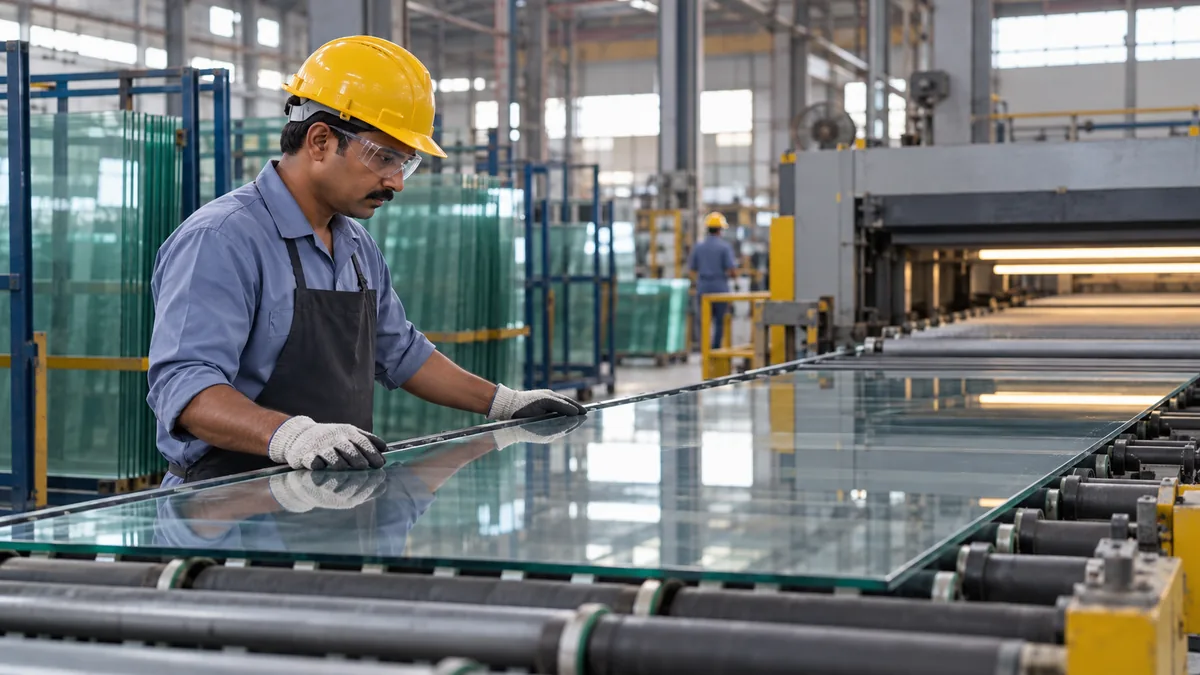
India’s glass industry includes automotive glazing, architectural float and processed glass, container glass, laboratory glassware and specialty products. Those markets need different furnaces, forming processes and quality tests. A manufacturer of jars is not a substitute for a safety-glass processor, and a float-glass brand may sell through regional processors rather than directly to a small buyer.
Which glass manufacturers and product groups should buyers compare?
| Company | Publicly described product or footprint | Buyer’s first technical question |
|---|---|---|
| Asahi India Glass (AIS) | Automotive and architectural glass; broad Indian manufacturing and processing footprint | Is the requirement OEM-grade auto glass, float glass or processed building glass? |
| Saint-Gobain India | Float, architectural and building solutions across a multi-plant network | Which plant/process and authorized processor supplies the specified make-up? |
| Hindusthan National Glass (HNG) | Container glass such as bottles and jars; plant network includes Neemrana | What is the exact container mould, colour, neck finish and food-contact declaration? |
| Borosil | Scientific and industrial glassware from facilities including Bharuch and Tarapur | What thermal, chemical and dimensional performance is specified? |
| Gold Plus Glass | Float, architectural and processed glass, with manufacturing plants described by the company | Match the glass type, make-up and processing requirement to the order |
| PGP Glass | Glass containers and bottles for pharmaceutical, cosmetics, perfumery and food uses (company facilities) | Confirm container type, neck finish, colour, order quantity and plant |
| AGI Glaspac | Container glass from its Bhongir manufacturing base (company profile) | Confirm volume, finish and packaging configuration |
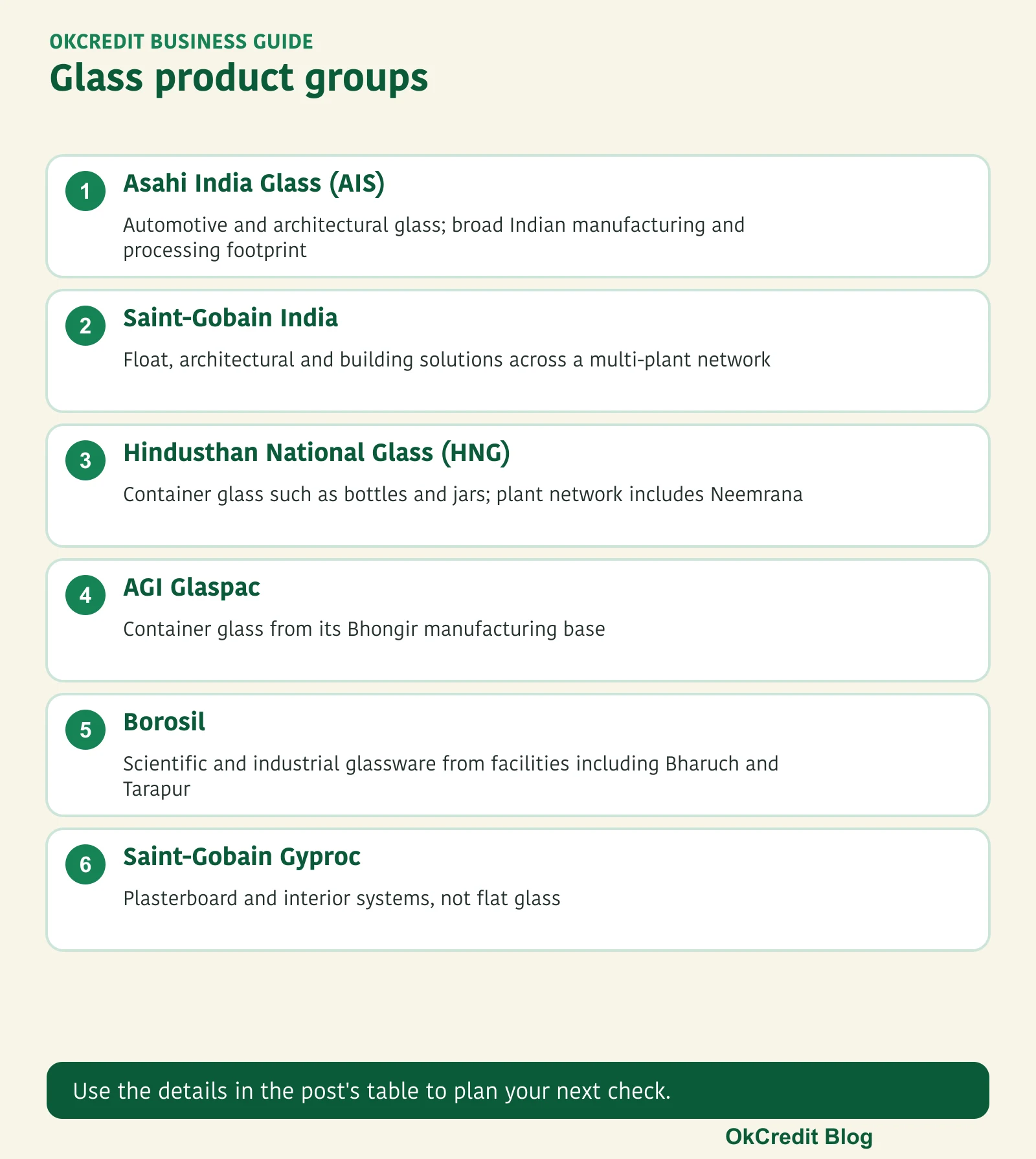
Product groups and supplier questions from the table.
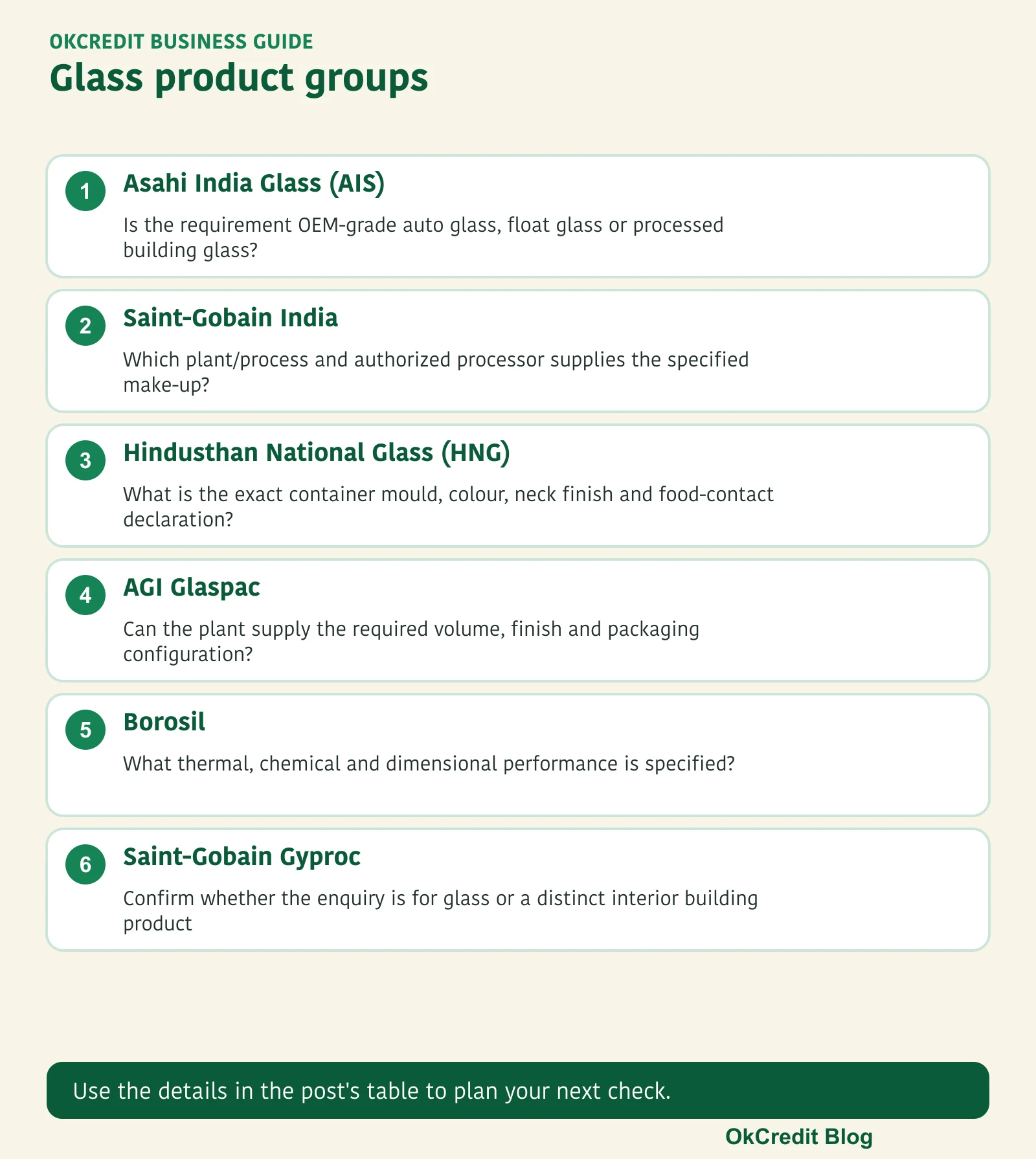
Match the specification and documents to the glass type.
This list identifies company product areas, not a guarantee of direct sales or a complete capacity record. HNG’s website notes that its content is being updated after corporate changes; verify current ownership, plant operation and order channel before using old contact details. For building projects, the processor that cuts, tempers, laminates or insulates glass may be the contracting supplier even when the brand is a large manufacturer.
What details should a glass purchase specification include?
State the application first: façade, window, shower enclosure, vehicle, bottle, laboratory use or interior partition. Then list glass type, thickness, dimensions, edge finish, coating, tint, heat treatment, lamination build-up, hole/cut-out location, tolerance and packaging. For insulating units, specify cavity, spacer and seal requirements. For containers, state capacity, weight, colour, neck finish, closure compatibility and decoration. A price quote without these details is not comparable.
For building safety, check the relevant Indian Standard and applicable Quality Control Order for the exact product. BIS publishes compulsory-certification categories and licence records; verify the product standard, licensee, factory and mark rather than accepting a generic “BIS approved” statement. Automotive or structural applications may require additional customer or code requirements. Ask the project consultant which standard governs before ordering.
How do buyers vet quality and damage risk?
Request a sample or mock-up that matches the actual construction, including coating and edge work. Inspect optical distortion, scratches, chips, inclusions and dimensional tolerance under the specified conditions. For safety glass, ask for the test evidence required by the relevant standard and confirm traceability to the product batch. For container glass, inspect finish, sealing surface, dimensions and compatibility with the closure. Keep approval samples signed and dated.
Transport is a major part of delivered cost. Confirm rack/crate type, unloading equipment, route access, transit insurance and who bears breakage risk. Record breakage at delivery with photographs and counts before signing a clean receipt. For a project, schedule deliveries by installation sequence; glass stored too long at an unsecured site can be damaged or stolen. Clarify whether the supplier will replace a broken pane or only provide a credit, and how quickly replacement production can happen.
How should a project compare quotations?
Compare cost per accepted square metre or per accepted container, not the headline price. Add processing, coating, tempering, lamination, edge finishing, packing, freight, taxes, unloading and wastage. Include lead time and replacement availability. Ask whether the quote is valid for a specific thickness and make-up, and whether an approved substitute is permitted. A lower price on a different build-up may create a compliance or performance problem.
For a new supplier, verify the legal entity, GSTIN, manufacturing or processing site, quality documents, references for a similar application and bank beneficiary. If the supplier is a processor, ask which original manufacturer’s glass it is using and whether the source is authorized. For regulated or high-value use, make the certificate and batch traceability a contractual requirement.
Where can you verify standards and suppliers?
Use the BIS compulsory certification list, product-specific guidance and relevant laboratory scope. Check company information directly with AIS, Borosil, HNG, Saint-Gobain India and AGI Glaspac. For another industrial directory, see manufacturers in Nagpur.
Frequently asked questions
Does every glass manufacturer sell directly to builders?
No. Large plants may work through fabricators, processors, distributors or OEM contracts. Ask which channel handles the required product and location.
Does a BIS mark on one glass type cover all products from that company?
No. Certification is product- and scope-specific. Match the standard and licence to the actual product and factory.
Who should bear breakage during transit?
The purchase contract should say so. Define the delivery point, unloading responsibility, inspection window and evidence needed for a breakage claim.
Is the cheapest glass quote usually the best value?
Not when specification, processing, packaging and replacement terms differ. Compare delivered cost for equivalent performance and accepted quality.