A Pollution Under Control certificate, usually called a PUC or PUCC, is the record that a vehicle passed an authorised emissions test under the applicable motor-vehicle rules. A PUC centre is an authorised testing point that measures vehicle exhaust with approved equipment and submits the result through the government system. The vehicle owner receives a certificate only when the measured values meet the relevant limit. A printed certificate, a roadside emissions test and a private garage’s informal check are not interchangeable.
The rules for opening a PUC centre are state- or union-territory specific. As one state-specific example, Uttarakhand’s Transport Department lists application fees of ₹4,000 for a petrol or diesel category, ₹8,000 for both categories, and a ₹25,000 security deposit in its PUC centre procedure. Check the current notice before investing and confirm your own state’s fee and authorisation process.
After a vehicle has been registered for one year, Rule 115(7) of the Central Motor Vehicles Rules requires it to carry a valid PUC certificate, generally valid for six months (MoRTH, CMVR Chapter V). The rule provides a twelve-month validity period for vehicles manufactured to Bharat Stage-IV norms.
What does a PUC certificate show?
The certificate links an emissions-test result to the vehicle and the test event. A centre captures vehicle details, fuel type and readings using its authorised equipment and the Parivahan PUC system. The test result is checked against the applicable emission standard for that vehicle category and fuel. If the reading passes, a certificate is issued with a validity date. If it fails, the owner should repair the cause and return for a fresh test instead of seeking a certificate without measurement.
The national online service lets a vehicle owner access PUC information and related application slips. The certificate is associated with the registration number and test record, so keep the vehicle number and certificate information consistent. If a portal shows a mismatch, contact the authorised centre or the relevant transport authority rather than editing a PDF or relying on an unofficial screenshot.
The emission test measures specified pollutants using calibrated equipment. Petrol and CNG vehicles generally use an exhaust gas analyser for readings such as carbon monoxide and hydrocarbons; diesel testing uses smoke measurement equipment. The applicable procedure and limit depend on vehicle class, fuel, manufacturing standard and notified rules. A PUC operator should follow the instrument’s test sequence and the current central or state directions, not a generic checklist found on an old blog.
When does a vehicle need a new PUC test?
A newly registered vehicle does not need a PUC certificate during its first year. After that, Rule 115(7) generally requires a certificate valid for six months, with a twelve-month validity period for vehicles manufactured to Bharat Stage-IV norms. Check the vehicle record and certificate expiry date, then arrange the next test in time (MoRTH, CMVR Chapter V). Fuel conversion, engine repair or a failed reading can also require a new emissions check under the applicable directions.
Do not confuse PUC validity with insurance validity, fitness certification or a vehicle’s registration certificate. They serve different purposes. A commercial vehicle may have additional fitness and permit obligations even when its PUC is current. A valid PUC does not certify that the vehicle is mechanically safe or that its fuel system has no leak.
How does a PUC test work at an authorised centre?
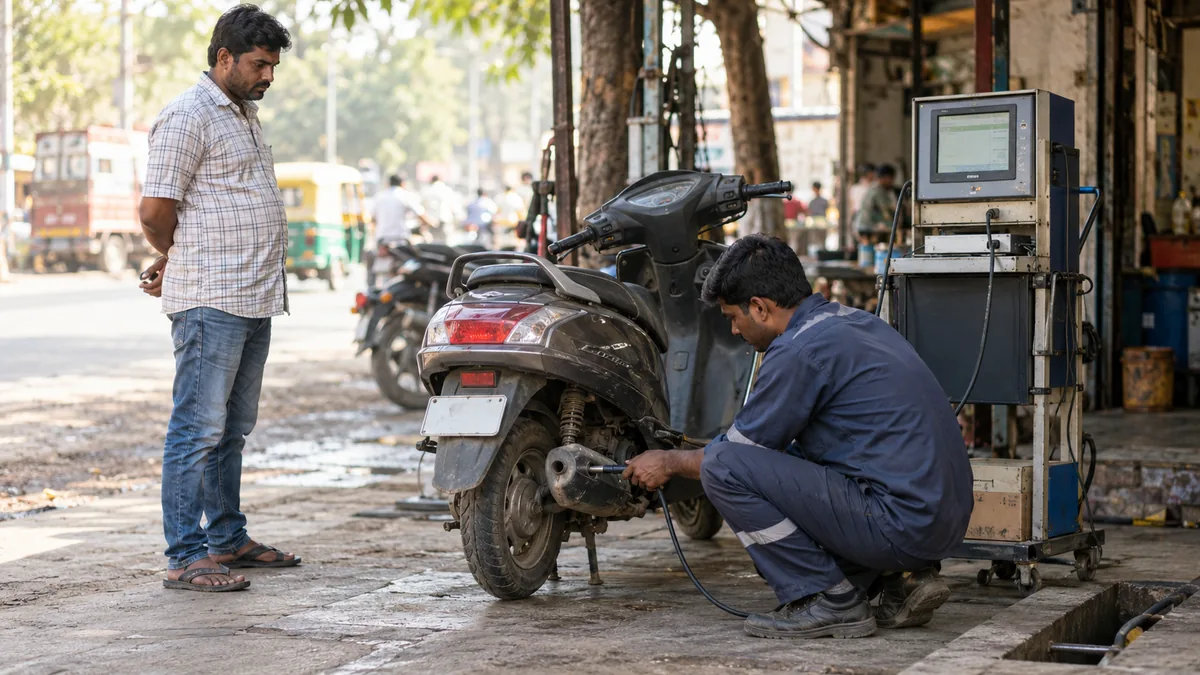
The operator first confirms the vehicle and fuel type, then checks the equipment and follows the correct test mode. The vehicle may need to be warmed as required by the procedure. The probe is positioned in the exhaust and the system records the reading. After submitting the result, the centre issues a certificate if the vehicle is within the relevant limit. Keep the certificate or digital record and note its expiry date.
A customer should check that the centre is authorised, that the test corresponds to the vehicle’s fuel and that the certificate identifies the correct registration. Do not pay for a result before the test is conducted. If the centre asks the driver to rev the engine or hold a specific RPM, follow the operator’s safety instructions and do not stand near moving parts or hot exhaust components.
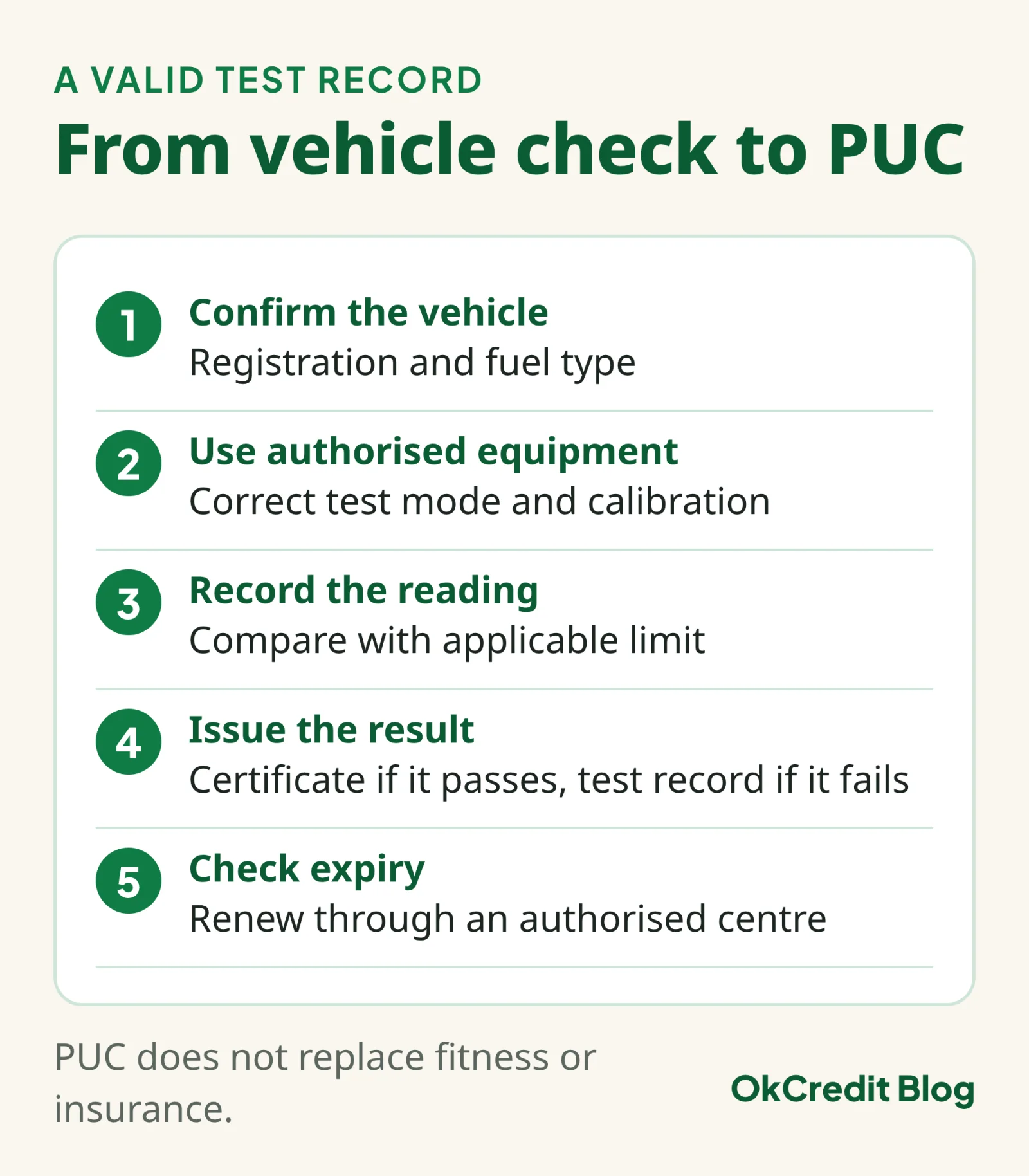
The certificate should follow a real test on authorised equipment.
A failed result does not prove a single component is defective. Air filters, engine condition, fuel quality, exhaust leaks, sensors, injection settings and other issues can affect readings. Ask a qualified mechanic to diagnose the vehicle and retain the test slip. After repair, have it tested again. A centre should not promise to “pass any vehicle” because that undermines the purpose of the certificate and may expose the operator to enforcement action.
What is required to open a PUC centre?
The state transport authority decides who may operate a centre, where it can operate and which equipment category it must install. The Ministry of Road Transport and Highways has directed states and union territories to authorise testing agencies and ensure centres use calibrated equipment. Requirements can include an application, proof of business or premises, a site map, machine purchase invoice, installation and calibration reports, maintenance contract, trained operator details and an inspection.
Uttarakhand’s published procedure asks for centre information, equipment and calibration details, site verification and an application fee. The Transport Department procedure lists ₹4,000 for a petrol or diesel category, ₹8,000 for both categories, a ₹25,000 security deposit, a maximum vehicle-owner charge of ₹100 per PUC certificate and an advance fee of ₹30 per certificate form. These amounts are state-specific and should be checked against the current notice before budgeting. The same state requires online application and document submission. These specifics are useful as an example of how state rules work, but they must not be copied into a budget for Maharashtra, Delhi or another state without checking that state’s own transport department.
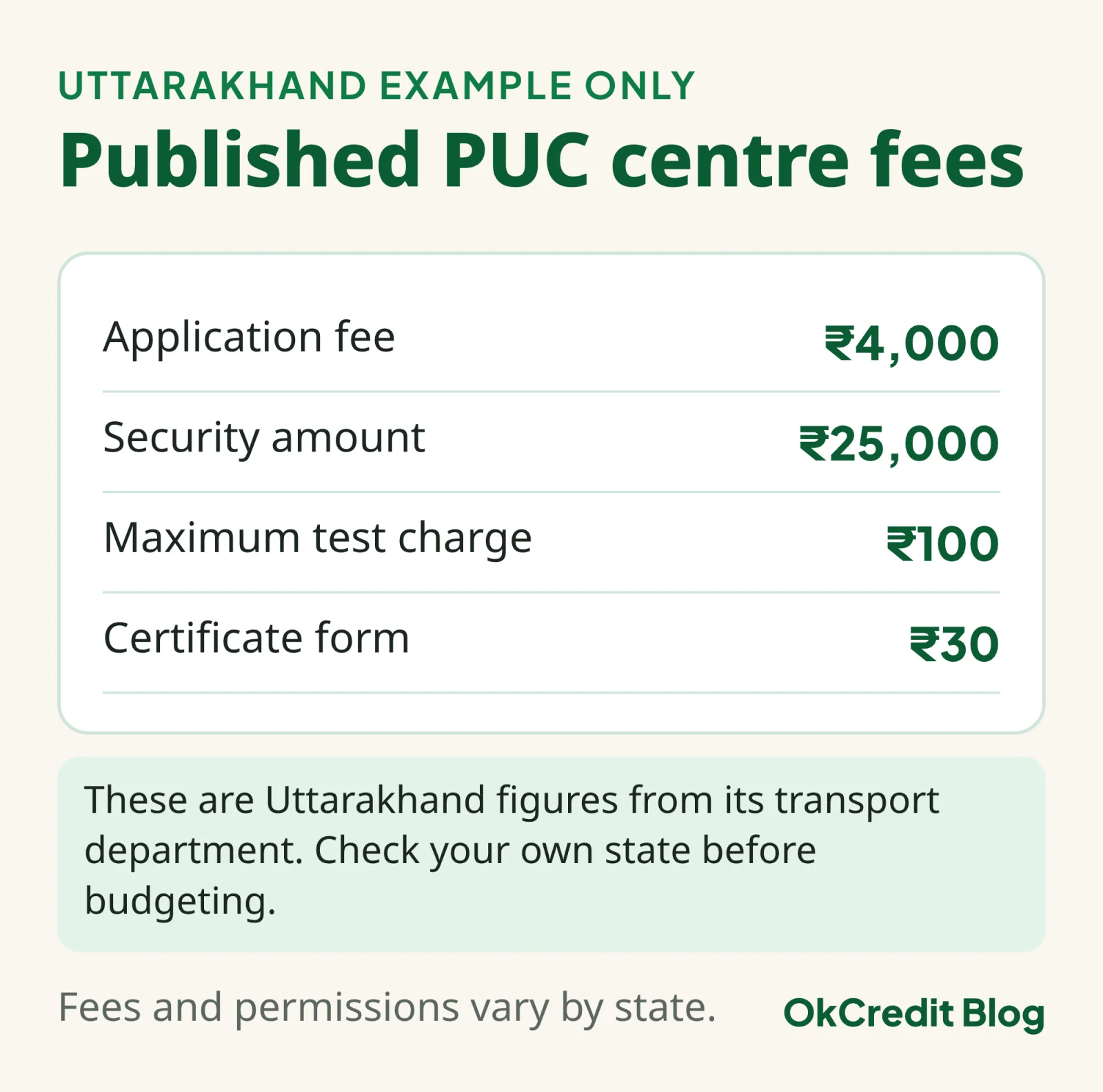
These amounts apply to the cited Uttarakhand procedure, not every state.
Before renting a location, ask the licensing authority whether new centre authorisations are open in that district and whether an existing petrol pump or garage is eligible. Confirm the minimum floor area, safe vehicle access, power supply, ventilation, machine category, portal login, security amount, certificate charges, renewal and audit requirements. Get the authority’s response in writing. A machine supplier saying “our equipment is approved everywhere” is not a substitute for the state’s written authorisation.
How should an applicant choose PUC equipment?
Check the required emission standards and the transport department’s approved equipment list before ordering. The Automotive Research Association of India certifies specified automotive test equipment. Confirm that the exact make and model, not just the manufacturer’s name, is eligible for the required use. Ask for a calibration certificate, installation and commissioning record, warranty, annual maintenance terms, consumables, software compatibility and service response time.
A low purchase price can become expensive if the equipment cannot connect to the current PUC software, calibration is delayed or spares are unavailable. Request a full quotation for the machine, printer, installation, training and ongoing maintenance. Check whether the quote includes applicable taxes and delivery. Do not buy a used analyzer until the state authority confirms that its certification, calibration history and serial number are acceptable.
What are the operating costs and business risks?
A centre’s investment can include equipment, authorisation, security, premises, electrical work, computer or printer, calibration and working cash. Monthly expenses include rent, operator wages, electricity, connectivity, maintenance, calibration provision and accounting. The centre may also pay per-certificate or form-related charges to the state. Since instrument prices, permitted locations and application windows vary, get at least two written equipment quotes and the state’s official fee schedule before preparing the project report.
Use a simple break-even check before borrowing: monthly fixed costs divided by the amount left from each valid test after variable fees and consumables. If a centre has ₹45,000 in monthly fixed costs and retains ₹35 per test after the state charge and variable items, it needs about 1,286 tests each month to cover fixed costs. This is an illustration only; the example does not claim a standard fee or revenue. Replace both numbers with your state’s rules, actual rent and customer volume estimate.
Footfall can be seasonal and depends on nearby vehicle traffic, competing authorised centres, fuel stations and repair workshops. A location beside a highway may have traffic but unsafe entry or no queue space. A workshop may offer a steady referral path but does not automatically qualify as a centre. Estimate daily testing capacity, opening hours and the time for calibration or downtime. Do not promise a specific certificate volume to a lender without local evidence.
What should a centre display and record?
Display the current authorisation and permitted fee where customers can see it. Keep test records, equipment calibration and maintenance records, operator details, receipts and certificate logs according to the state’s instructions. Do not store unnecessary personal data. If the portal is offline, follow the authority’s stated procedure rather than issuing an unverified paper pass. Report equipment faults and follow the calibration schedule.
For vehicle owners, the important numbers are the certificate expiry and test reading. For a centre operator, the business records are just as important: tests completed, failed tests, repeat visits after repairs, certificate fees collected, portal outages and machine maintenance. A clear ledger helps reconcile cash and UPI payments, but the government PUC system remains the official record of each test. For a general funding checklist, see how to prepare a business loan plan and daily bookkeeping for a retail shop.
What should a driver do after a failed PUC test?
Ask for the test result and take the vehicle to a qualified workshop for diagnosis. Share the readings rather than asking a mechanic to replace parts without checking. Once the repair is complete, return to an authorised centre and repeat the test. Keep the new certificate and set a reminder before its expiry. Never alter a certificate image or use another vehicle’s record.
If a centre refuses to share the result, charges a different amount from the displayed fee or claims it can issue a pass without testing, note the centre’s authorisation details and contact the state transport department. Do not confront staff in a way that creates a safety risk. Use the official grievance channel and retain receipts or screenshots where lawful.
A vehicle used in contravention of prescribed pollution standards can attract the penalty under section 190(2) of the Motor Vehicles Act, up to ₹10,000 (India Code, Motor Vehicles Act).
Frequently asked questions
Is PUC the same as a vehicle fitness certificate?
No. PUC records an emissions test. Fitness, registration, insurance and permits have separate requirements and validity periods.
Can every garage issue a PUC certificate?
No. A garage can issue one only if it has the required authorisation, equipment, portal access and current compliance under the state or union-territory process.
Does a PUC certificate have the same price everywhere?
No. Test charges and centre authorisation fees can be set or capped by the relevant authority. The Uttarakhand values in this guide are a state-specific example, not a national tariff.
What happens if a vehicle fails the emissions test?
The centre records the failure. Have a qualified mechanic diagnose and repair the vehicle, then take a fresh test at an authorised centre.
How do I check whether a PUC centre is authorised?
Use the current state transport department or Parivahan PUC information and check the displayed authorisation at the centre. If unsure, contact the local transport office.