
The best small business near a school, college or coaching centre solves a repeat need on the route students already walk: stationery, printing, affordable food, water, repairs, transport support or a quiet study space. India’s UDISE+ 2024-25 report counts 1,471,473 schools, but the national total does not prove demand on your street. Before signing a lease, count footfall at entry, lunch and dispersal times, compare nearby sellers, and ask students or parents what they actually buy. A lean counter may take about ₹1.5 lakh to ₹4 lakh to set up, while a food outlet, print shop or study room can need substantially more. These are planning ranges, not local quotations.
Student-facing demand has a calendar. Uniform and book sales peak before term, snacks rise at breaks, exam printing can spike near tests, and a hostel or coaching cluster may stay active later in the evening. A business with more than one buyer group, such as students plus teachers and nearby offices, can be steadier than a shop built around a single school list.
What should you check before choosing the business?
Walk the actual route from the gate to bus stops, hostels, parking, tuition lanes and housing. Note where students slow down and where parents wait. Visit at different times on at least three ordinary days, not only during an annual event. Count people who can safely reach a storefront, not every person visible from across a road. Ask nearby shopkeepers about seasonal dips and what is already available.
Check the school’s rules and the local administration’s rules. A school may restrict vendors, banners or food sales near its gate. Public footpaths, bus bays and school property are not automatically available for a stall. If you plan to trade on a public street, ask the municipality or Town Vending Committee about permission. For rented premises, verify the landlord’s written consent for food preparation, signage, machinery, customer queues and operating hours.
Which businesses can work near an educational institute?
These are lean planning ranges for small formats using rented space, modest equipment and limited opening stock. They exclude major property deposits, vehicle purchase and franchise fees. Actual costs vary by city, product mix and whether equipment is new, used or rented.
| Business | Indicative setup range | First demand test |
|---|---|---|
| Stationery and exam supplies | ₹1.5-4 lakh | Ask for the 20 most repeated school or coaching items |
| Photocopy, print, scan and binding | ₹1.2-4 lakh | Count print jobs from the nearby student route |
| Breakfast or snack counter | ₹1.5-5 lakh | Test one short menu during the actual break window |
| Tiffin and packed lunch pickup | ₹40,000-₹1.5 lakh | Pre-sell a small number of weekly meal slots |
| Bottled water and quick essentials | ₹50,000-₹1.8 lakh | Check footfall, summer demand and supplier delivery |
| Uniform alterations and repair | ₹60,000-₹2 lakh | Ask families about fit, repair and delivery turnaround |
| Phone accessories and basic repair | ₹1-3.5 lakh | Test demand for charging cables, screen guards and repairs |
| Used textbooks and book exchange | ₹50,000-₹2 lakh | Collect actual class lists and buyback interest |
| Art, model-making and project supplies | ₹70,000-₹2.5 lakh | Ask teachers which materials students need repeatedly |
| Paid study room or reading space | ₹3-10 lakh | Survey quiet-seat demand, hours and monthly willingness to pay |
The table is a comparison starter. For a food counter, FSSAI and hygiene requirements apply. A stationery or print shop has different registration and machine needs. A study room needs fire safety, occupancy, building and local permissions appropriate to its premises. Add staffing, rent, power, maintenance and working cash before comparing which option is truly affordable.
Why might stationery or printing be the safest first choice?
Stationery covers daily top-up purchases and last-minute exam needs. Printing, scanning and binding add a service revenue line that can keep the counter useful outside school-season peaks. The risk is tying too much money in slow-moving stock such as expensive art sets, branded gifts or grade-specific books. Keep an opening list narrow, based on the nearby institutions, and reorder small quantities until you see what moves.
A print service needs a per-page cost sheet. Include paper, toner, drum or cartridge, electricity, machine servicing, spoiled sheets and operator time. A ₹2 print price is not ₹2 profit. Compare the purchase price and rental plan for a copier; a low monthly lease can be useful if volumes are uncertain, while high per-page charges may become expensive later. If a student asks you to print sensitive documents, handle them privately and do not keep unnecessary copies.
A 2026 setup guide for a compact stationery and Xerox shop lists a wide range of equipment and stock choices, from leasing a copier to purchasing one. Treat the supplier’s listed costs as a prompt for quotations rather than as your local market rate. Ask at least two vendors about service response, toner availability, annual maintenance and machine downtime.
Does a food counter make sense beside the gate?
Food can sell repeatedly, but only if the permitted location, hygiene, water supply and serving speed work. Observe whether students can leave the campus during breaks. Some schools prohibit outside food or student exit. A menu of two or three reliable items is easier to cost than a long list that creates waste. Use one serving size, weigh the main ingredient and log each day’s leftover quantity.
If you make or sell food, FSSAI category and licensing rules are relevant. From 1 April 2026, FSSAI revised turnover categories: registration generally covers businesses up to ₹1.5 crore annual turnover, State Licence above ₹1.5 crore up to ₹50 crore, and Central Licence above ₹50 crore, subject to the activity-specific FoSCoS eligibility rules. A street vendor registered with a municipal corporation or Town Vending Committee may fall under a deemed-registration reform described by FSSAI, but confirm whether the rule applies to your business and location. Do not copy the older ₹12 lakh threshold from outdated guides.
Calculate contribution per item before setting the price. If a snack sells for ₹30 and its food, packaging and direct fuel cost total ₹17, the ₹13 balance must still cover rent, wage, wastage, water, cleaning and tax. If monthly fixed costs are ₹30,000, you need 2,308 such sales just to cover those fixed costs at ₹13 contribution, before owner pay. This illustration is arithmetic, not a forecast. Replace ingredient prices, recipe yield and selling price with your actual bills and observed sales.
Could a tiffin or meal pickup service work better than a shop?
A tiffin service can start with pre-orders and avoid an expensive high-footfall storefront, but delivery timing and food safety become the main constraints. Begin with a fixed pickup point or a limited delivery radius. Take weekly payment or clear booking terms so you are not cooking an unknown number of meals. Ask students about dietary needs without promising health outcomes. If you use a home kitchen for a commercial food business, verify applicable local, housing and FSSAI requirements before taking paid orders.
A meal plan should show portion size, menu rotation, pickup time, cancellation policy and how you handle late collection. Track ingredient cost and unsold portions daily. Do not scale based on one event or exam week. A recurring order from teachers, hostel residents or coaching staff can smooth out demand if service quality remains consistent.
How should you price products and avoid dead stock?
Write the landed cost for each product: invoice rate, transport, packing, damage and any payment charge. Then set a selling price that leaves a gross margin, not simply a small markup over the printed MRP. On packaged goods, do not sell above MRP. For services, price based on consumables, machine wear and staff time. Compare the same offer at other shops, but do not copy a competitor’s price if your costs differ.
A weekly item sheet can show opening stock, purchases, units sold, returned items and closing stock. Keep fast sellers at eye level and reorder them before the last unit. Mark slow items for a bundle or end-of-term clearance only if the price remains lawful and transparent. Buying a large “school reopening” lot at a discount can still lose money if the school changes its list or parents buy a bundle elsewhere.
Make institutional sales on clear written terms. State price, delivery date, quantity, replacement conditions and due date. A large order from a school or coaching centre may have a longer payment cycle than individual counter sales. If you offer credit, set a limit and follow up before ordering more stock. See how to start a stationery business for stock planning and how to prepare a business loan plan for cash-flow estimates.
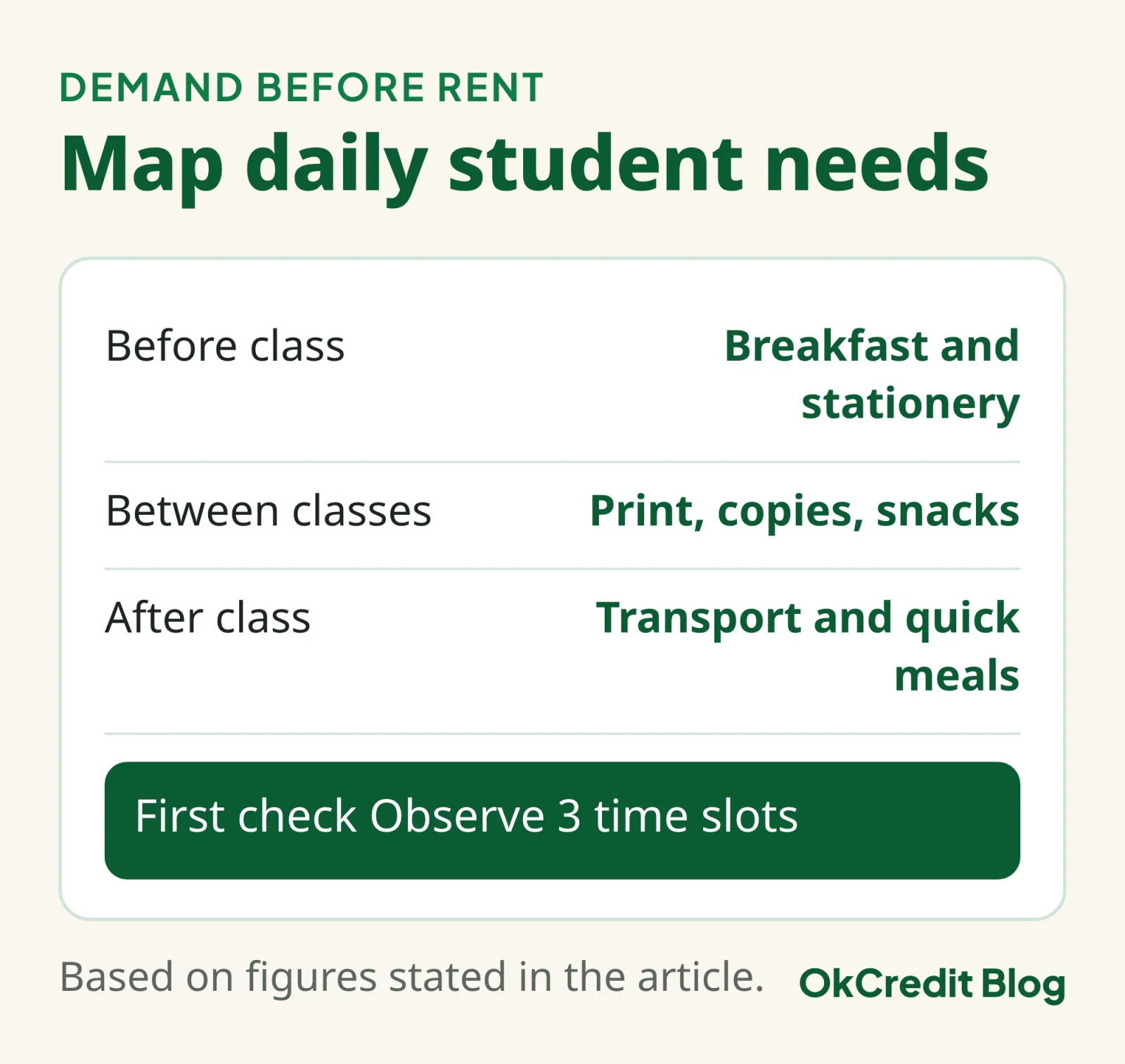
Observe customer needs before renting near an institute.
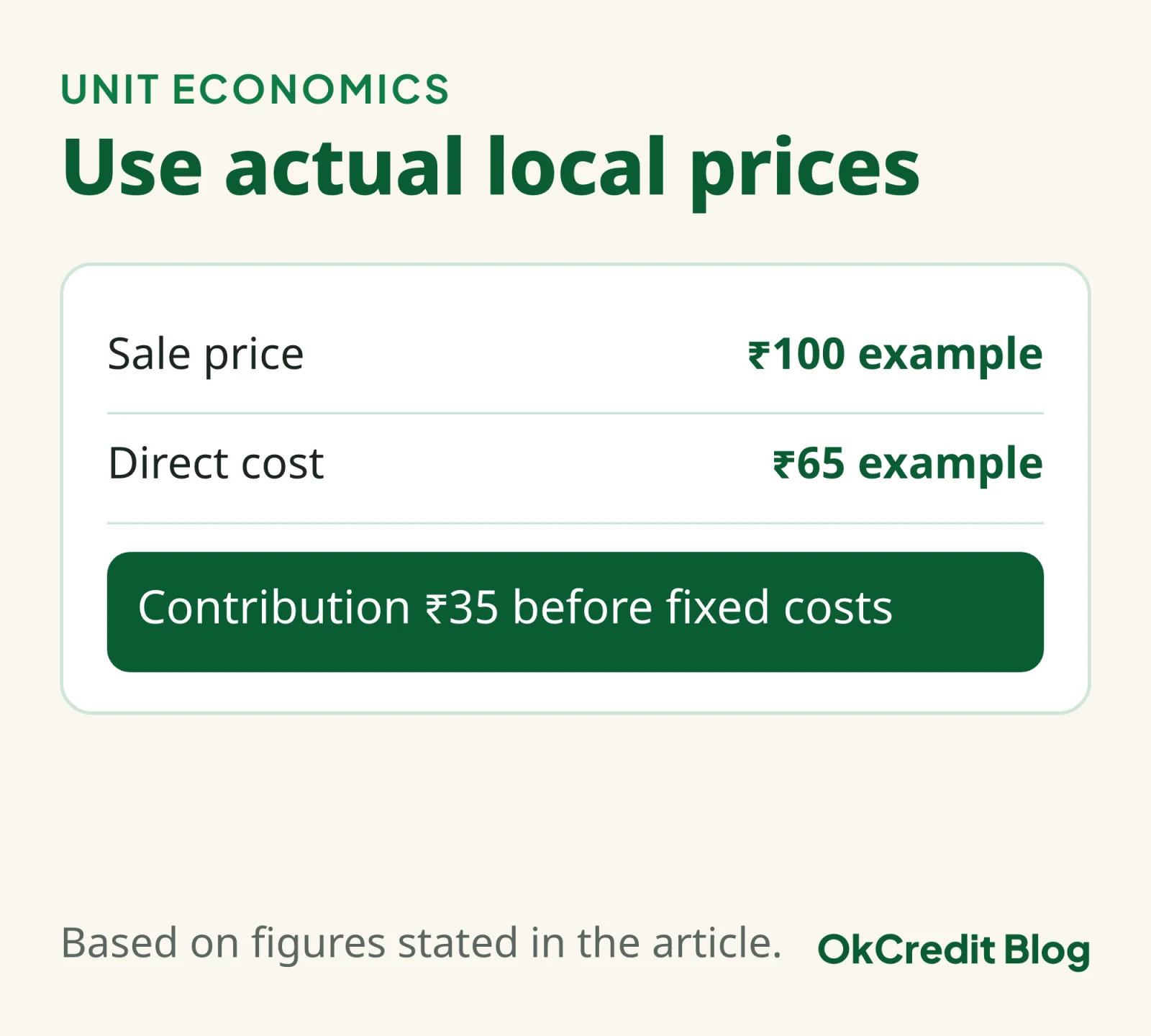
The worked example shows contribution before fixed expenses.
What registrations and safety steps may apply?
Check the state Shops and Establishments process and municipal trade licence before signing a lease. GST registration depends on aggregate turnover, type of supply, state and sales channel. CBIC’s GST guidance lists different thresholds and exceptions, so do not apply a blanket number to a business combining goods and services. Udyam registration is a free MSME identity, not a replacement for local permissions.
For packaged items, retain purchase invoices and respect labelling and MRP declarations. If you sell toys, verify the current BIS quality-control requirements and mark on the exact product. For a food outlet, use potable water, covered storage, clean utensils and safe waste disposal. A commercial kitchen may need more than a basic registration depending on scale and activity. For a study room, check occupancy limits, exits, electrical safety, toilet access, ventilation and local fire requirements before collecting subscriptions.
Avoid setting up a stall on a road, footpath or bus area because it looks busy. Ask the local authority whether that site is approved and how vending permission is granted. If a school offers a formal tender or canteen contract, use the published procedure and do not pay an unofficial intermediary for access.
How do you test a location before taking a lease?
Run a one-week location study. On a simple sheet, record 15-minute footfall counts at morning arrival, lunch or break, dispersal and evening coaching hours. Note how many people already buy from competing shops, what they carry, whether they are students or parents, and how long queues take. Ask ten potential customers which item or service they had to travel elsewhere to find. Do not collect children’s personal data or photograph them without consent.
Use this evidence to compare two or three units. Estimate monthly rent, deposit, fit-out, power, staffing and the distance from the actual student route. Calculate break-even with contribution per sale. If rent is ₹25,000 and other fixed expenses are ₹20,000, a shop with ₹10 contribution on the average sale needs 4,500 sales a month to cover ₹45,000 fixed costs. That is 150 sales per day over a 30-day month before owner pay. If local footfall cannot support that, choose a smaller counter, shared premises or pre-order format.
See our guides to starting a stationery business and opening a small tea stall.
Frequently asked questions
Which business near a school needs the least capital?
A small stationery counter, used textbook exchange, repair service or pre-order tiffin route may start smaller than a full café or study centre. The actual budget depends on premises, equipment and local approvals.
Is a school-gate location always best?
No. A nearby route can create visibility, but permissions, safe access, competition, rent and school rules matter. Count relevant footfall before paying a deposit.
Can I sell snacks from a roadside cart?
Only where local vending and food-safety rules allow it. Ask the municipality or Town Vending Committee about the location, and confirm the food registration category in FoSCoS.
How much should I keep for inventory?
Start with a focused range and enough working cash to reorder fast-moving items. Use invoices and weekly sales records before expanding into books, gifts or premium supplies.
How do I know whether the business is profitable?
Calculate contribution after direct product or service costs, then subtract rent, wages, utilities, wastage, maintenance and owner pay. Revenue alone does not show profit.