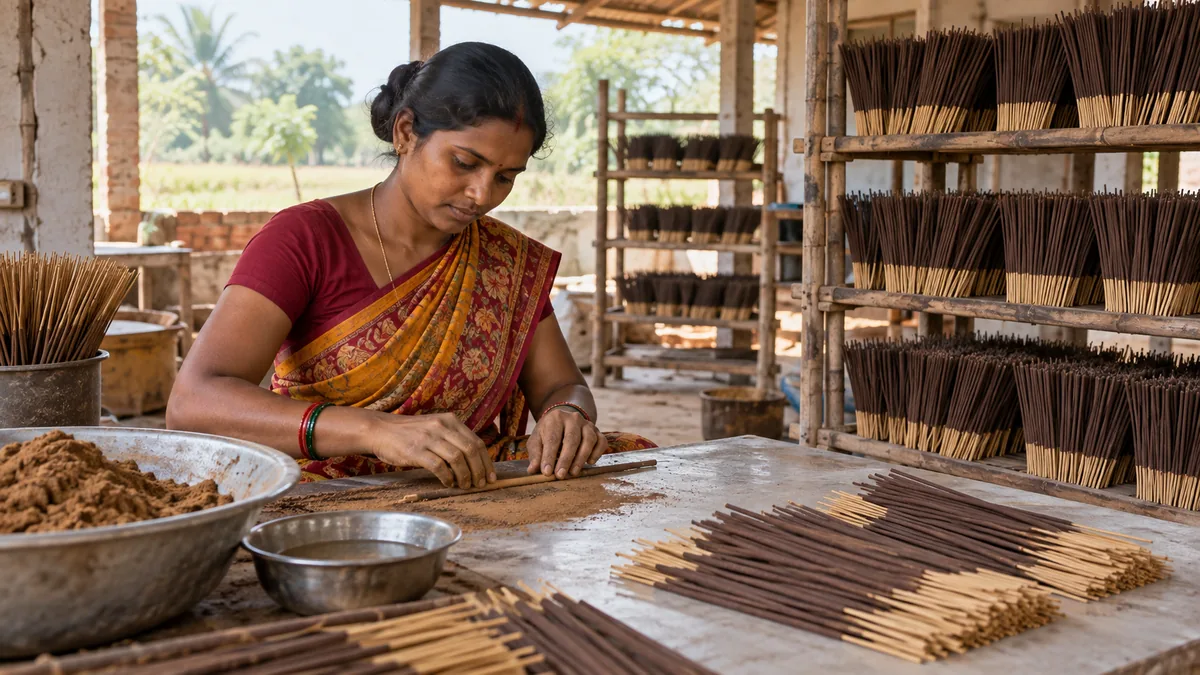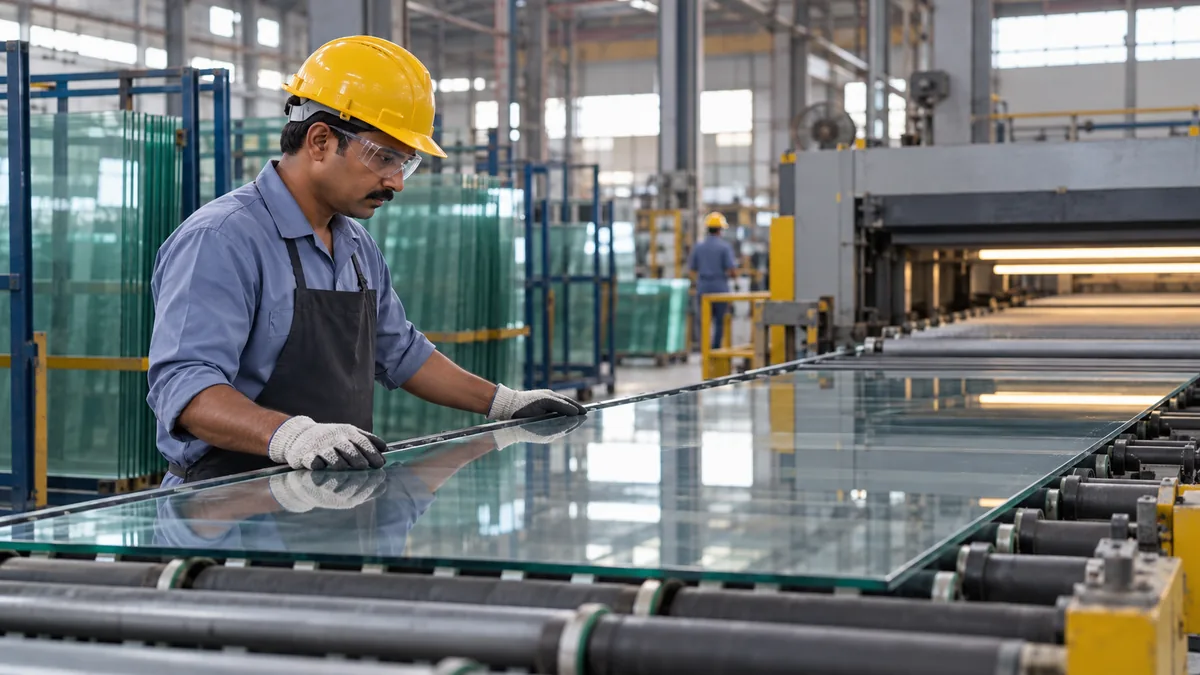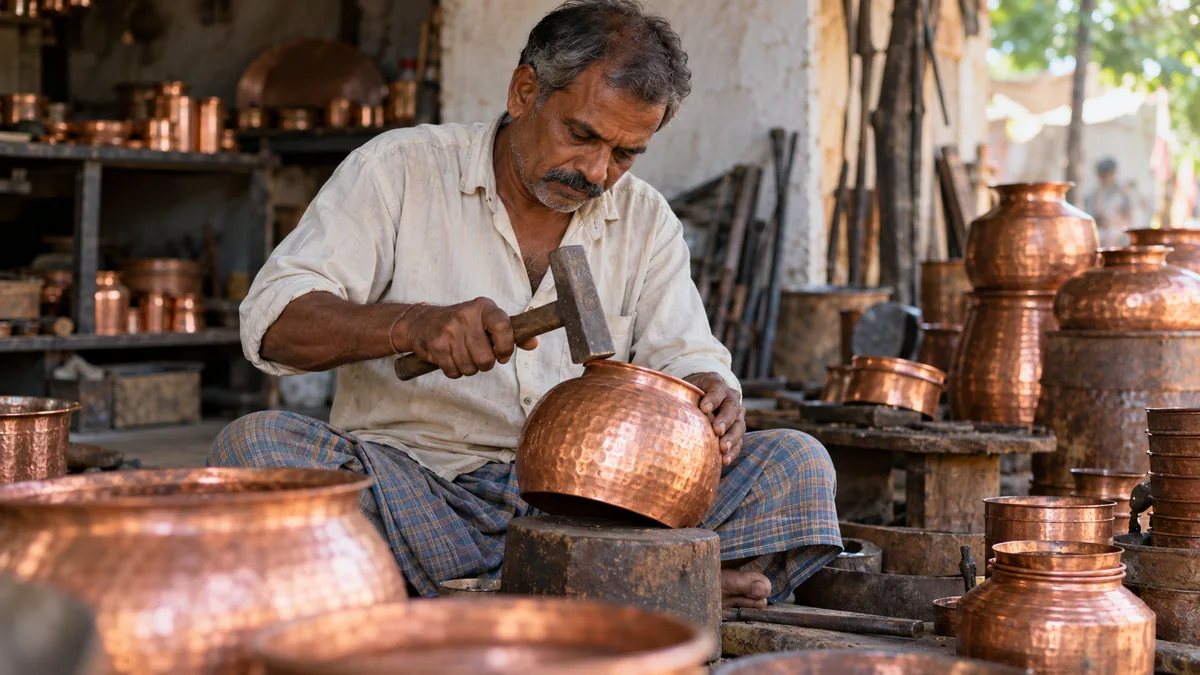
India’s copper manufacturers range from large refiners making cathodes and continuous-cast rods to downstream firms supplying winding wire, bus bars, strips, tubes and cable products. The right company depends on your specification and order size. Hindalco operates an integrated copper complex at Dahej and lists 99.99% cathodes, rods, wires and tubes; Kutch Copper in Mundra has begun production and is ramping up cathode and rod sales; Vedanta’s Sterlite Copper operates a refinery and copper rod plants at Silvassa (company operations page); downstream suppliers include Precision Wires, Ram Ratna Wires and Bhagyanagar India. Before requesting a quote, decide the product form, grade, size, standard and test documents you need.
A “copper manufacturer” may mean a smelter, refinery, rod mill, wire drawer, tube mill or component maker. These businesses buy different raw materials and sell different products. A cable contractor seeking 8 mm electrical rod should not begin with a copper foil converter, and a transformer maker seeking paper-insulated conductors should compare winding-wire specialists rather than raw cathode producers.
Which companies make copper products in India?
The list below uses company and government sources available in 2026. It is not a ranking or an exhaustive directory. Production capacity is not the same as current output or available stock. Confirm facility status, specification and commercial availability with the manufacturer.
| Manufacturer | Products and facility context | Buyer fit to investigate |
|---|---|---|
| Hindalco Industries, Birla Copper | Dahej complex; cathodes, ETP and oxygen-free rods, wires, copper tubes and foil | Refined copper, electrical rod, downstream industrial requirements |
| Kutch Copper, Adani Enterprises | Mundra copper complex; cathodes and rods, ramping up sales after operations began | Large-volume cathode and rod requirements, subject to current allocation |
| Vedanta, Sterlite Copper | Silvassa refinery and copper rod plants, as described by Sterlite Copper | Rod and downstream electrical applications |
| Hindustan Copper Limited | Integrated mining and refining operations, plus Taloja wire-rod facility | Mining-linked supply, cathodes or continuous-cast wire rod by unit |
| Precision Wires India | Silvassa winding wire facilities: enamelled round and rectangular wire, CTC and paper-insulated conductors | Motors, transformers, generators, pumps and electrical equipment |
| Ram Ratna Wires | Enameled copper wires, strips, submersible winding wires and related conductors | Industrial winding and electrical wire requirements |
| Bhagyanagar India | Bus bars, wires, rods, foils, sheets, tubes, strips and related copper components | Power distribution, transformers, solar and engineering components |
| Finolex Cables | Multi-location cable and wire production; copper rods at Ponda, Goa | Electrical cable and conductor requirements |
Hindalco’s FY2025-26 integrated report lists production capacity of 0.42 million tonnes for copper cathodes and 0.54 million tonnes for continuous-cast rods. Its product pages describe rods in 8 mm to 26 mm sizes and note that certain larger diameters are approved by the Research Designs and Standards Organisation for railway electrification. These details help an industrial buyer match a product, but they do not mean every size is available for immediate delivery.
Kutch Copper’s annual report describes a Mundra complex with 0.5 million tonnes per year capacity and a plan to scale to 1 million tonnes. The FY2024-25 report says operations have commenced and cathode and rod sales are ramping up. Buyers should check current product availability, production schedule and sales channel rather than assume announced capacity is immediately available as spot stock.
Hindustan Copper Limited is the only company in India engaged in copper ore mining, according to its company profile. Its business locations have different functions: Ghatsila is integrated from mining to refined copper production, Malanjkhand and Khetri focus on mining and beneficiation, and Taloja has a wire rod facility. Ask which unit supplies your required form. A corporate address or mine location does not identify the sales desk for every product.
How do you match copper product to the application?
Cathode is a refined input used by rod and downstream manufacturers. Continuous-cast rod is commonly drawn into wire and cable conductor. Enamelled winding wire has an insulating coating and is used in motors, transformers, generators and appliances. Copper strip, bus bar and flat conductors are specified by width, thickness, conductivity and temper. Tubes require a defined outside diameter, wall thickness, temper and intended use. Foil and sheet require thickness tolerance, surface finish and packaging that prevents damage.
A purchase inquiry should include the complete specification, not only the word “copper.” State grade or standard, purity, form, dimensions and tolerance, temper, quantity, packing, destination, test certificate requirement, inspection method and delivery window. If you need a substitute, ask the engineering or quality team to approve it before ordering. A visually similar tube or wire can have a different standard, wall thickness or electrical performance.
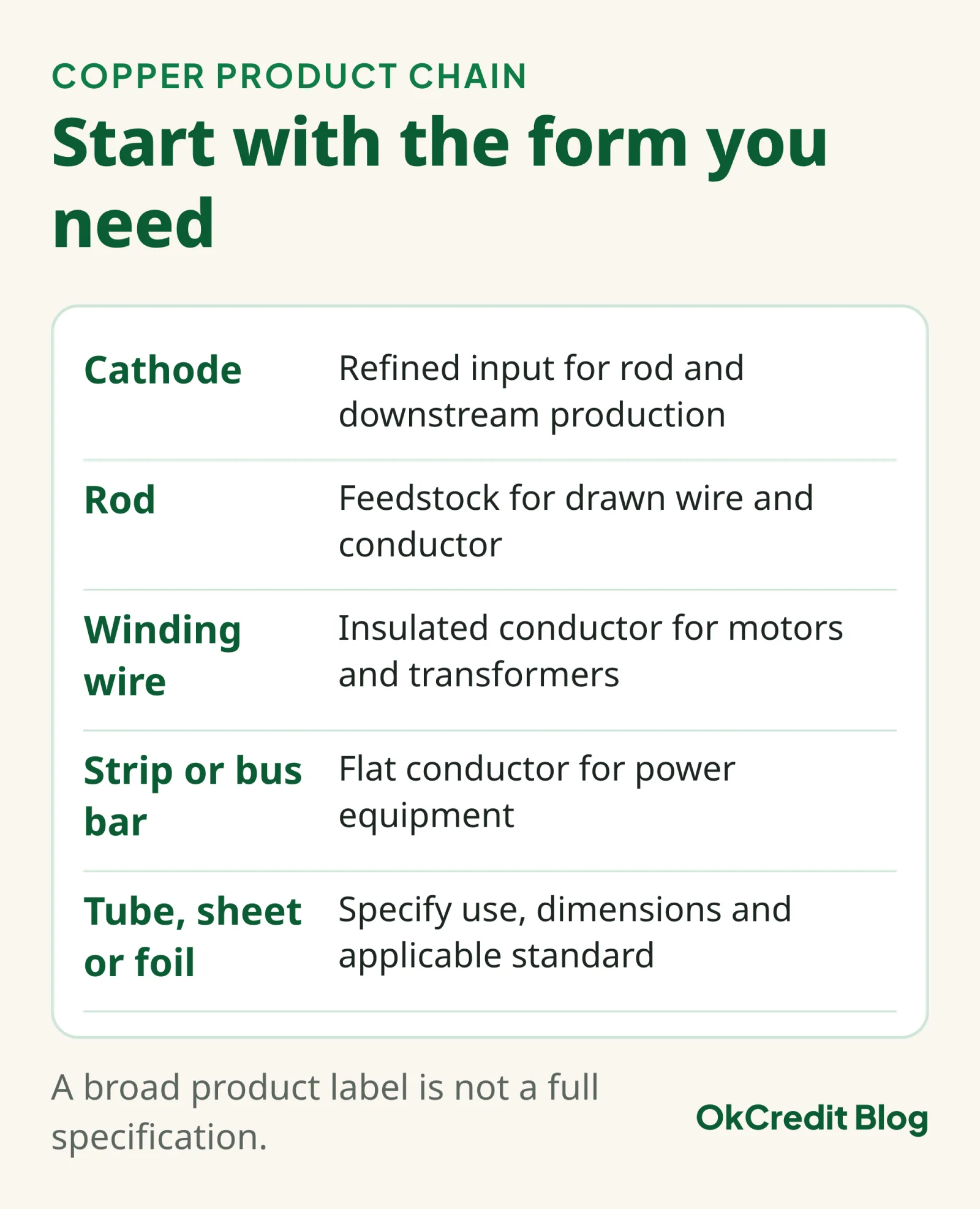
Choose the manufacturer based on the final product form you need.
For winding wire, specify conductor size, enamel type, insulation class, thermal rating, elongation and test report. For bus bars, specify width, thickness, conductivity, plating, hole pattern and allowable dimensional tolerance. For tubes, include whether the design needs smooth or inner-grooved surface and confirm the applicable Indian Standard. Keep the approved sample or first-article report with the purchase order.
What quality rules should a buyer know in 2026?
The Bureau of Indian Standards lists multiple copper product Quality Control Orders and standards, including electrical copper wire rod, rods and bars, copper strip and several tube products. Its Scheme-I page shows the 2024 Copper Products QCO and amendments in 2025 and 2026. Check the current BIS order for the exact product and the manufacturer’s valid licence before purchase. Do not assume a certificate for one copper product covers every size or category made by the same company.
For any current customs duty or exemption on imported copper tubes, check the applicable notification on the CBIC Tax Information Portal, including its date, product coverage and effective period, before relying on a reported amendment.
BIS’s application guidance says certification involves identifying the Indian Standard, documenting manufacturing infrastructure and quality controls, and assessment/testing. Buyers should request a current licence number and verify its scope in the BIS system.
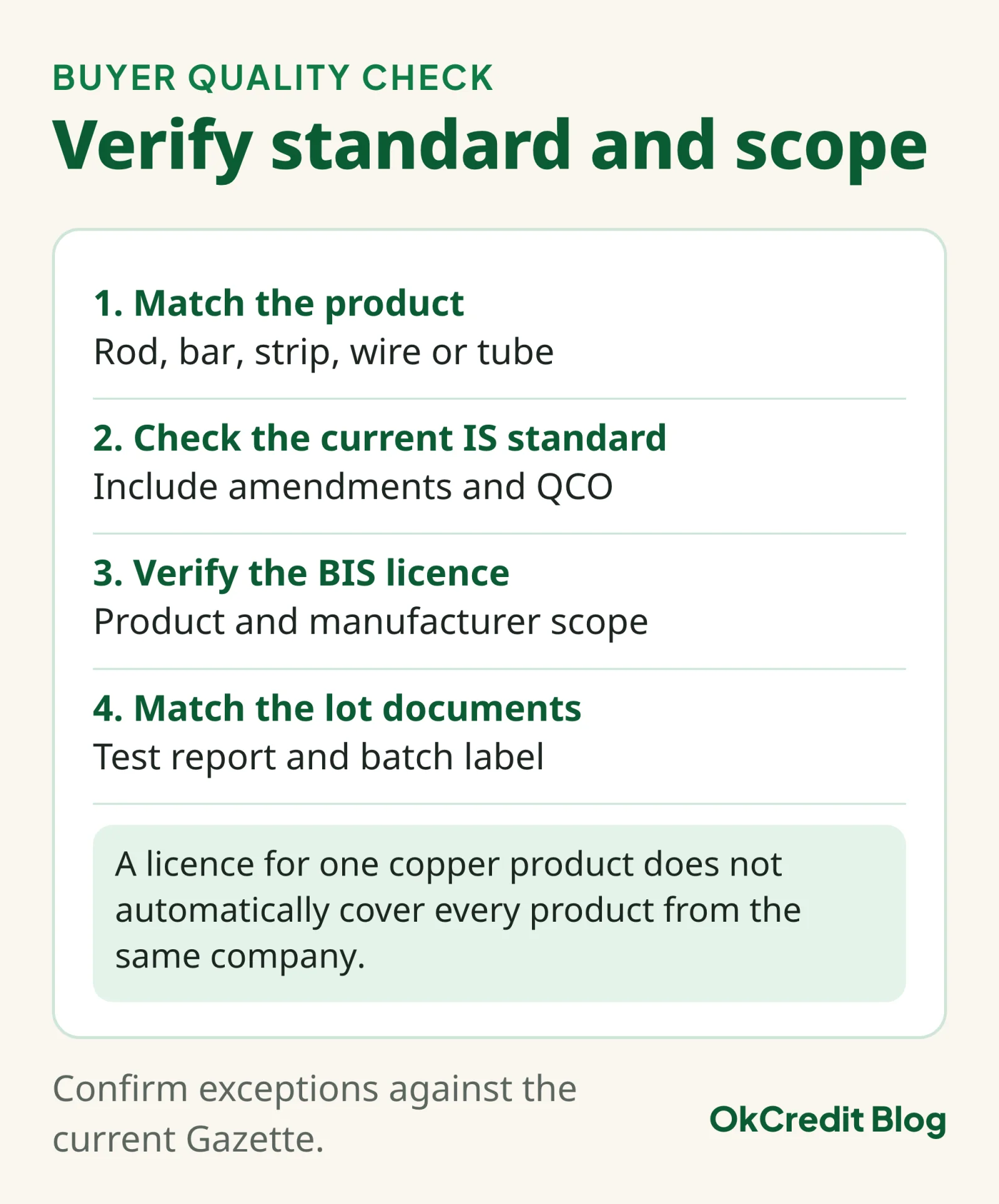
Confirm the current Gazette for product-specific exceptions.
For export, railway, defence, HVAC or other regulated uses, additional customer approvals or technical requirements may apply beyond a general product standard.
How should you request a copper quote?
Send the same request to each shortlisted supplier so their offers can be compared. Include annual or monthly volume, batch size, exact specification, delivery location, required test certificate, payment terms, packaging, inspection point and whether transport is included. Ask for a quote validity date because copper pricing can move with global metal references, currency, conversion premium and local freight. A quote without a pricing basis or validity period is hard to compare.
Check whether the seller is the manufacturer, an authorised distributor or a trader. Ask for the invoice entity, manufacturing location, product origin, lot traceability and contact for quality claims. A distributor may be suitable for smaller orders and faster local delivery, while a mill may quote larger minimum quantities. Compare total landed cost, not only the per-kilogram rate.
For a first order, request a sample or trial lot. Check weight, dimensions, surface condition, coil or bundle labels and material test certificate against the purchase order. Record heat, batch or lot number where supplied. If the product is rejected, follow the contract’s inspection and claim window. A price advantage disappears quickly when a conductor has inconsistent dimensions or a tube fails at installation.
Where can small manufacturers and buyers find suppliers?
Use official company product pages and investor reports to identify product range and factory locations. The Indian Bureau of Mines’ Indian Minerals Yearbook provides sector context and reported production data, though publication figures may refer to earlier financial years. The BIS product certification system helps verify licences and standards. For smaller fabrication units, industry associations and local electrical or engineering clusters can point to stockists, conversion partners and testing facilities.
Do not treat a marketplace profile as a compliance certificate. Before an advance, match the seller’s bank account to the invoicing entity and verify GST details. Ask for a sample invoice with grade and unit clearly stated. If a supplier claims to be an approved railway or utility vendor, check the buyer’s current vendor list or tender notice. “Used by major companies” is not the same as current approval for your product.
A new business can begin as a distributor or processor rather than a smelter. Refining copper is capital-intensive and subject to environmental, safety, energy, raw-material and quality requirements. A more realistic entry may be winding wire conversion, bus-bar fabrication, cut-to-length service, cable accessories or local inventory, but each still needs machinery, trained operators, testing, working capital and required licences. Build a business case from customer drawings and confirmed demand, not from the number of copper products listed online. For industrial site context, see manufacturers in Aurangabad and the surrounding cluster and government policy support for small businesses.
What should go into a supplier shortlist?
Score each supplier against the same requirements: product scope, current facility, BIS licence where applicable, standard and test report, ability to meet dimensions, minimum order, lead time, packing, payment conditions, quality response and freight. A shortlist of three suppliers is easier to manage than a long directory with no verified contacts. Keep a note of the date you checked each company page because plants and product lines change.
For ongoing purchases, track delivery acceptance, quality defects, on-time performance and total landed cost by lot. A lower-priced quote that repeatedly arrives late can create production downtime. A higher-priced supplier with consistent coils may reduce rejection and rework. Review performance after several deliveries, and keep a second qualified source for critical components where practical.
If the product is a downstream electrical component rather than a raw metal input, compare applicable safety standards and end-use approvals. The copper itself can meet a specification while insulation, joints or assembly fail. The supplier should provide product-specific documents, not a generic company brochure.
Frequently asked questions
Who is the largest copper manufacturer in India?
The answer depends on whether you mean mined copper, refined cathodes, rods, tubes or winding wire. Hindalco reports large cathode and rod capacity; Kutch Copper is ramping up; other manufacturers specialise in downstream products. Compare like with like.
Which Indian company makes copper cathodes?
Hindalco, Kutch Copper and Vedanta list cathodes among their product lines. Confirm current capacity, facility, BIS licence and availability directly before ordering.
Does every copper rod need a BIS mark?
BIS requirements depend on the product category and current Quality Control Order. Check the relevant standard, order, amendments and licence scope for the exact rod or bar.
What should I include in a copper purchase inquiry?
Specify grade, standard, dimensions, quantity, tolerance, temper, test documents, packing, destination, inspection, delivery window and pricing basis.
Can a small business start a copper factory with a small budget?
A primary smelter or refinery is capital-intensive. Smaller downstream operations may be more feasible, but still need machinery, working capital, quality systems, trained staff and compliance approvals.