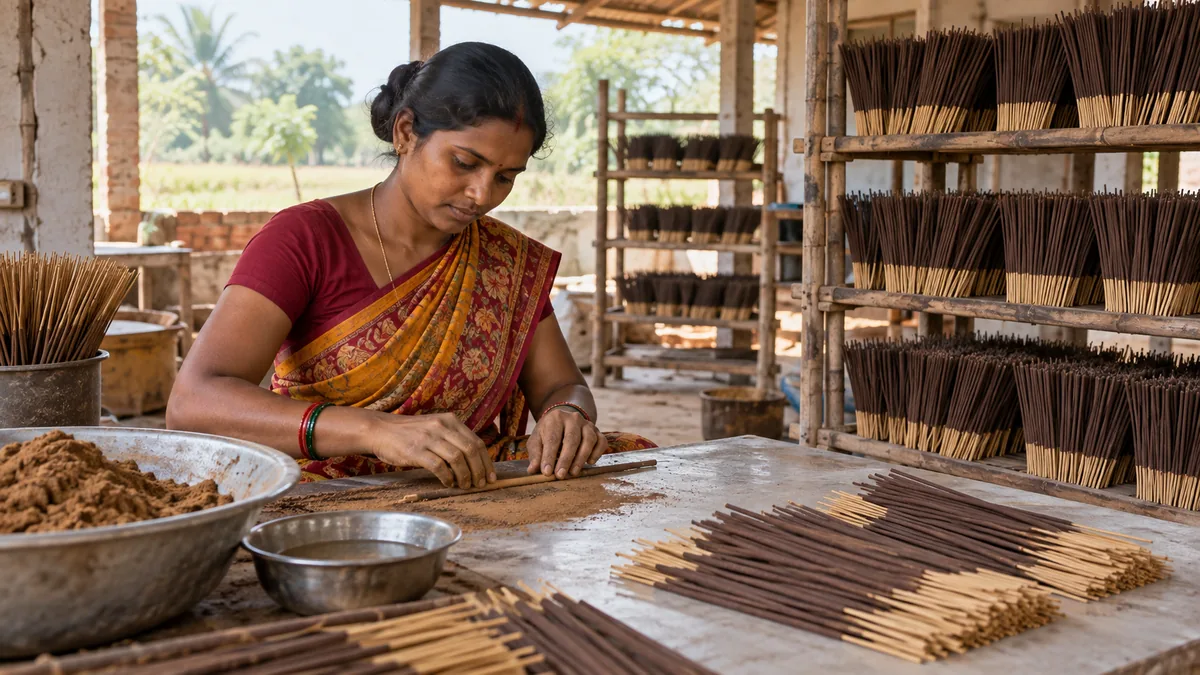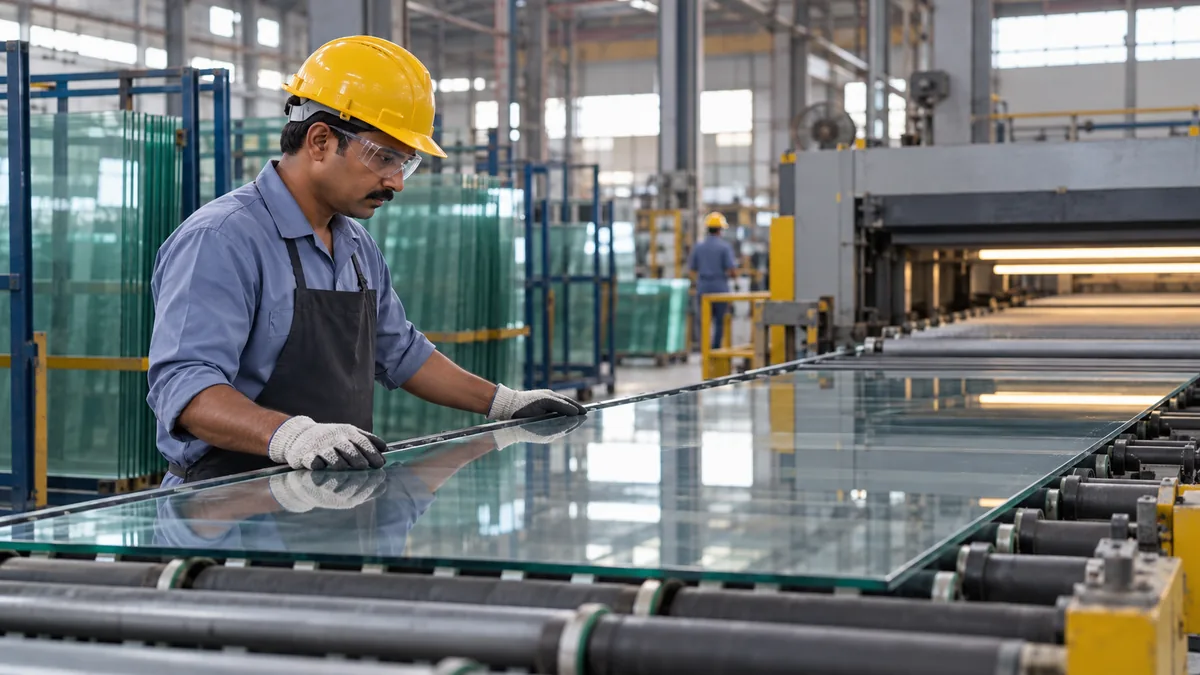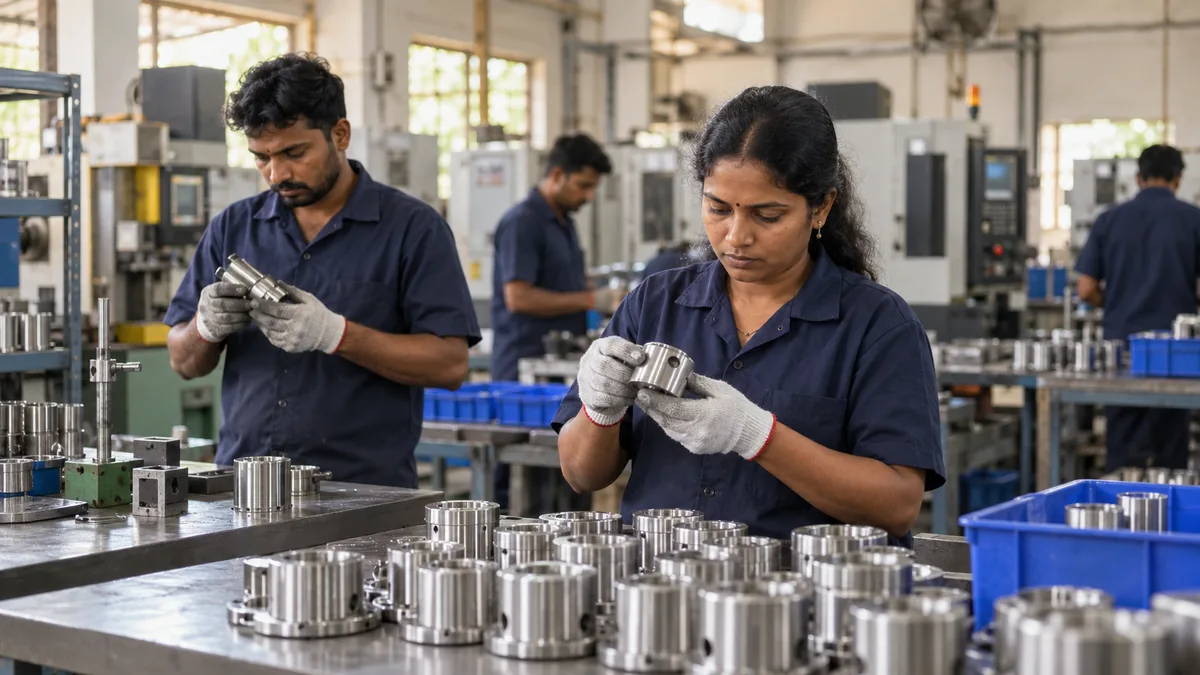
Aurangabad, officially Chhatrapati Sambhajinagar, is a manufacturing centre with established industrial areas at Waluj, Chikalthana and Shendra, and the newer Shendra-Bidkin industrial city. The region has activity in vehicles and components, pharmaceuticals, engineering and industrial equipment. Among companies with publicly verifiable local facilities are Bajaj Auto, Endurance Technologies, Wockhardt and Siemens. A company’s presence in the district does not automatically mean its plant is open to visitors or that it buys from small vendors. Suppliers should verify the right procurement route before spending on samples or travel.
The district’s older industrial base and new investment zone serve different purposes. MIDC maintains Maharashtra industrial areas, while the National Industrial Corridor Development Corporation describes Shendra-Bidkin as a greenfield industrial city connected to the Delhi-Mumbai Industrial Corridor. Its published overview identifies EVs, automotive, aerospace and electronics as target sectors. Use the current name Chhatrapati Sambhajinagar when searching newer company pages, but include “Aurangabad” because many legacy addresses and vendor records still use it.
Which industrial areas should a supplier know?
Waluj is a large established industrial area with automotive, components, engineering and consumer-product operations. Chikalthana has a mix of manufacturing, services and support units. Shendra has industrial and SEZ facilities, including pharmaceutical production and newer manufacturing investments. Shendra-Bidkin, usually shortened to AURIC or SBIA, is a newer planned zone; do not confuse a proposed project, under-construction facility and operating factory.
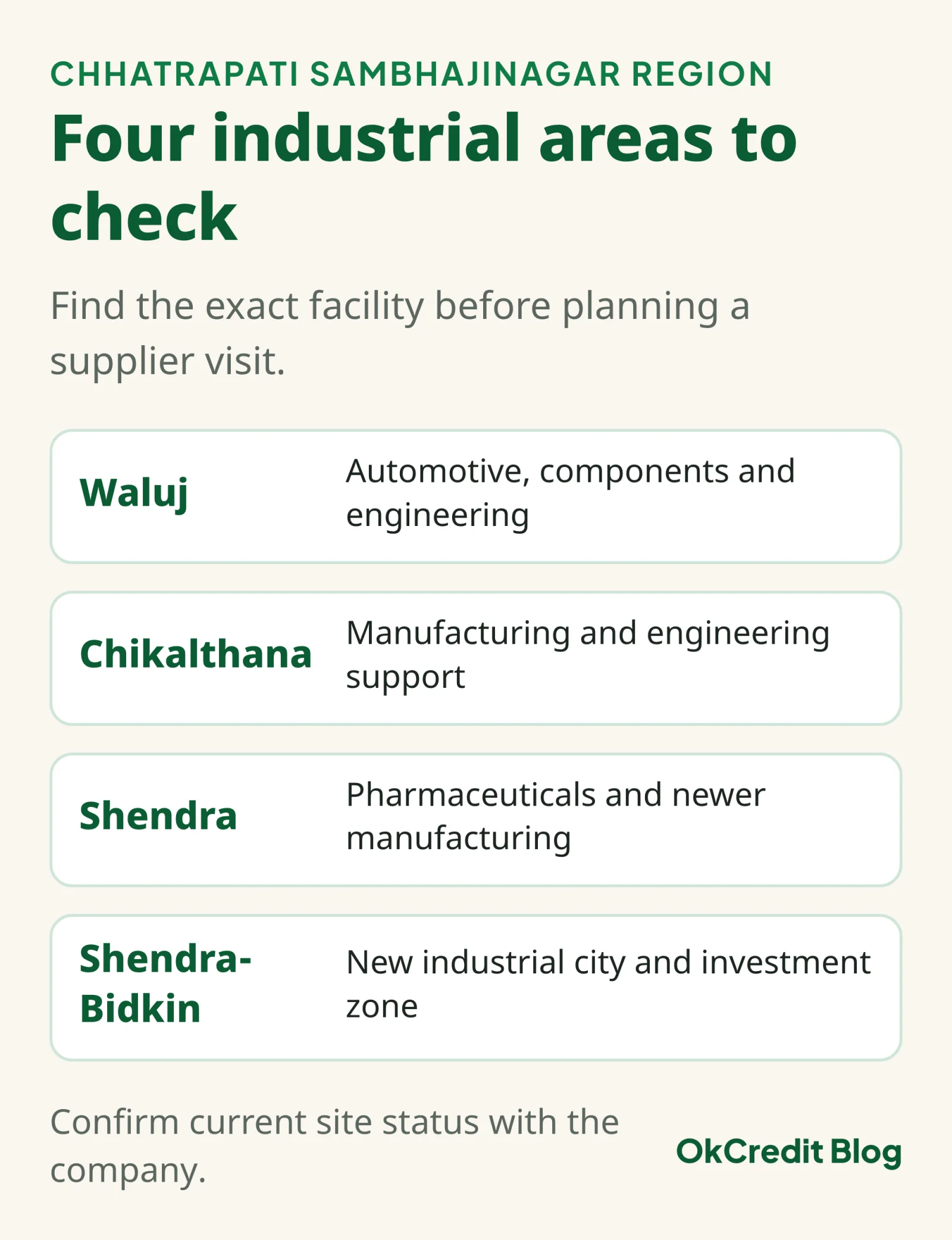
Use the area as a starting point, then verify the exact unit address.
For a visit, identify the exact gate, unit name and contact first. Industrial area maps, company pages and tender notices may refer to a registered office, corporate office, warehouse or plant interchangeably. A listing with a local postal address is not enough to establish what is manufactured there. Check the company’s own “locations” or “manufacturing facilities” page, its latest annual report, and any exchange filing about a new facility.
Which manufacturers have verified facilities in the region?
The following examples are based on company and public infrastructure sources available in 2026. They are not a ranking, and the list is not a complete directory of every factory in the district.
| Company | Local presence or sector | What a supplier should verify |
|---|---|---|
| Bajaj Auto | Waluj manufacturing facility; FY2025-26 report lists motorcycles and commercial vehicles | Current vendor onboarding, commodity, plant gate and purchase entity |
| Wockhardt | Shendra-SEZ pharmaceutical manufacturing units | Site-specific quality systems and approved vendor category |
| Siemens | Aurangabad rail transport manufacturing location | Current product scope and tender or supplier registration route |
| Varroc | Automotive components with a Shendra presence in company materials | Facility status and the exact contracting entity |
| Endurance Technologies | AURIC Shendra facility for machined castings; commercial production announcement in company investor records (Endurance investor archive) | Exact facility, product scope, buyer approval and supplier onboarding route |
Bajaj Auto identifies Waluj as a manufacturing location. Check the latest company disclosures for current capacity, and distinguish announced capacity from current production or supplier demand. Endurance reported that its Waluj brake R&D facility had been commissioned and that its AURIC Shendra plant started commercial production on 25 September 2026 (company investor archive). That gives a more current signal than an old directory entry, but it still does not indicate which vendors it is onboarding.
Wockhardt’s own site lists its Shendra-SEZ facility and describes separate blocks for injectable, oral solid, liquid, ointment and inhaler forms. Pharmaceutical procurement and quality audits are tightly controlled. A casual sales visit is unlikely to reach the right team. Siemens’ rail manufacturing facility is part of a different procurement ecosystem: suppliers may need technical approvals, quality documentation and participation in a formal tender or sourcing process.
How do you check whether a factory is operating now?
Use a four-step verification. First, find the local unit on the company’s own website and note whether the page calls it a plant, office or project. Second, inspect the latest annual report or investor presentation for location and current product category. Third, search official stock exchange filings for commissioning, commercial production, closure, expansion or capacity changes. Fourth, call the listed corporate switchboard and ask which department manages local vendor registration. Do not rely on an old Google Maps pin or an unaffiliated “manufacturer list” alone.
A site may be in a district while the purchase department sits in Pune, Mumbai or another city. A plant can also manufacture one component and source a completely different category through a central team. Before arranging a meeting, request the person’s name, department, available slot, visitor ID requirements, safety shoes or PPE needs, and whether photography is prohibited. Many facilities do not permit walk-in visits.
How can a small manufacturer become a supplier?
Make a one-page capability sheet before contacting procurement. State the legal name, GSTIN, Udyam number if applicable, factory address, product category, monthly capacity, machine list, quality certifications, testing method, current customer references that you are authorised to share, and a contact person. Include clear photographs of your own process, not photos copied from a buyer’s site. If you supply a part, attach the drawing revision or material specification you can actually meet.
Prepare a sample cost sheet with raw material, conversion, packaging, freight, rejection allowance, payment terms and tax shown separately. Large plants may request vendor registration, a sample approval, plant audit, quality documentation, bank details and compliance declarations before issuing a purchase order. A purchase inquiry or sample request is not a confirmed order. Do not buy a new machine solely on an informal message from an unknown person claiming to represent a major company.
The Ministry of MSME’s Udyam portal lists registration as free, paperless and based on self-declaration. The 2025-26 micro-enterprise criteria are investment up to ₹2.5 crore and turnover up to ₹10 crore, subject to the classification rules. Udyam helps identify an enterprise as an MSME, but it does not certify product quality or guarantee that a manufacturer will empanel you. Keep GST, factory, labour, pollution and product-specific approvals current where your activity requires them.
Which local industries create supplier opportunities?
Automotive and EV facilities may buy machined components, castings, fasteners, packaging, maintenance services, testing and logistics. The buyer will usually insist on part drawings, traceability and process control. A general engineering workshop should not call itself an automotive supplier until it can show repeatable quality and appropriate inspection records.
Pharmaceutical production creates demand for validated utilities, cleanroom-compatible services, approved packaging, maintenance, laboratory equipment and qualified inputs. The approval process can be much stricter than a typical local factory purchase. Do not pitch generic food-grade or ordinary packaging as pharmaceutical-compliant without specifications and proof.
Rail and heavy equipment facilities may work with metal fabrication, bogies, electrical components, machining and industrial service vendors. Here, drawings, welding procedures, test reports, material certificates and tender conditions can determine whether a bid is even considered. Local vendors may also serve tier-one suppliers rather than the large manufacturer directly. Ask procurement teams which route applies to your category.
Regional industrial support organisations such as the Marathwada Auto Cluster provide shared infrastructure and sector connections. A cluster facility can help a smaller unit access testing or common services, but eligibility, charges and available equipment should be confirmed directly. Attend a current industry association meeting or supplier session with a specific product sheet rather than expecting a general networking event to produce a contract.
What should you include in a first supplier email?
Keep the first note short and specific: identify the part or service category, explain why it fits the plant’s current operation, state your location and available capacity, and ask for the correct vendor-registration link or buyer contact. Attach a one-page PDF, not a large catalogue. If the company operates several sites, ask whether sourcing is local or central. Follow up once after a reasonable interval rather than calling multiple employees repeatedly.
Do not send confidential drawings, customer data or bank details through a personal messaging account. Verify a procurement domain and purchase-order number using the company’s published switchboard. Large manufacturers warn suppliers about impersonation and fake purchase orders; be cautious if someone demands a registration fee, deposits a cheque with an excess amount, or insists on buying from a named third party. Genuine supplier qualification should be confirmed through the company’s official channel.
For wider supplier context, compare Indian biscuit manufacturers and bearing manufacturers in India.
For a first quotation, ask what documentation is needed before quoting the price. A buyer may need material test certificates, dimensional inspection reports, packaging specifications, insurance, labour compliance or a quality system certificate. Send only documents relevant to the product and keep a version date on each. If the requested specification is outside your current capability, say so before taking a sample order. A delayed or nonconforming first delivery can cost more than a lost lead.
Record follow-ups in a simple pipeline: company, facility, buyer or portal, category pitched, next step, date sent, response and actual purchase order. Do not treat a visit or vendor code as revenue.
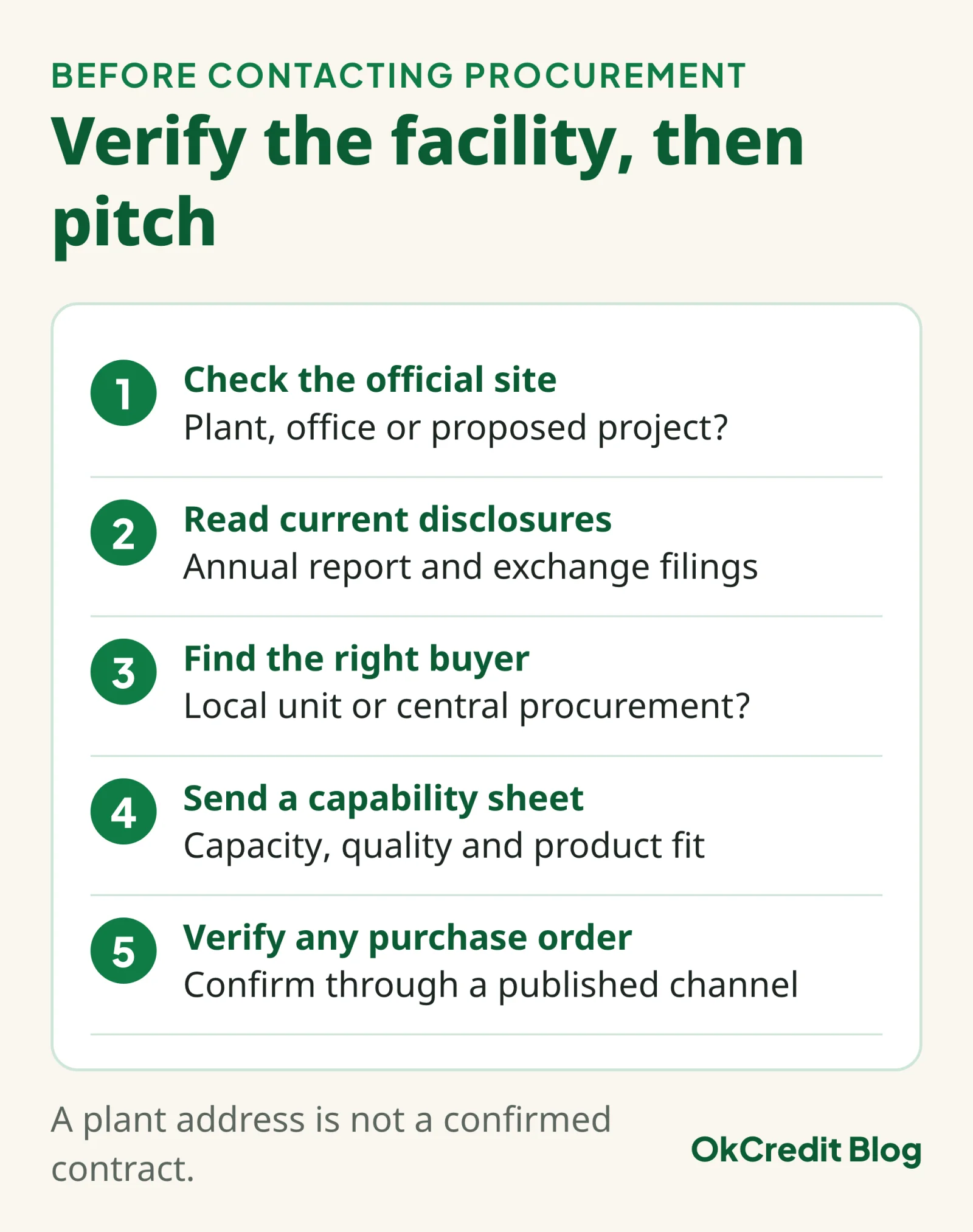
Confirm every step through the company’s official channel.
The useful number is the value of orders delivered and accepted, less material, conversion, freight, rejection and payment-delay costs. Local plants create possible customer access, but winning a contract still depends on fit, quality, price and reliable fulfilment.
Frequently asked questions
Is Aurangabad the same as Chhatrapati Sambhajinagar for factory searches?
Many current sources use Chhatrapati Sambhajinagar, while older plant addresses and business records use Aurangabad. Search both names and confirm the company’s exact unit location.
Can I visit Bajaj Auto or another plant without an appointment?
Do not assume so. Contact the company through a published channel, ask about visitor approval and safety requirements, and confirm the department before travelling.
Does a local factory address mean that company buys from local vendors?
No. Purchasing may be centralised, limited to approved suppliers or handled through a tier-one vendor. Ask the right procurement team about the category and onboarding requirements.
What should a small supplier prepare first?
Prepare a capability sheet, current registrations, product specification, capacity evidence, quality records, sample costing and references you are allowed to disclose.
Are the companies listed here a complete Aurangabad directory?
No. They are examples with verifiable local facilities or operations. Check MIDC, AURIC, current company disclosures and local industry associations for other active units.