India’s shoe manufacturers are concentrated in clusters with different strengths: Agra and Kanpur for leather footwear, Chennai, Ambur and Ranipet for leather and export-linked production, and Kolkata for varied footwear and components. The right supplier depends on material, construction, order size, testing needs and delivery schedule, not a directory ranking. Before sending a purchase order in 2026, verify the factory’s legal identity, visit or video-audit the production floor, approve a sample, and agree in writing on size grading, defects, packaging and dispatch terms.
Where are India’s main footwear manufacturing clusters?
The Government of India’s July 2025 overview identifies Agra, Kanpur, Chennai, Ranipet, Ambur and Kolkata among major footwear production centres. It reports around 15,000 manufacturing units as of 2024 and more than two million people employed in the sector. Those are broad sector figures, not a promise that every unit in a cluster can make your design or meet export buyer requirements.
Agra has a long-established leather footwear ecosystem and many small workshops alongside larger mechanised plants. Kanpur has leather and allied manufacturing capability. Tamil Nadu’s Chennai, Ranipet and Ambur belt is tied to leather processing, footwear exports, components and a trained industrial workforce. Kolkata has footwear production and component suppliers, while other locations may suit synthetic, sports or molded footwear. Treat cluster reputation as a starting point for supplier discovery, then inspect each factory.
Which type of manufacturer do you need?
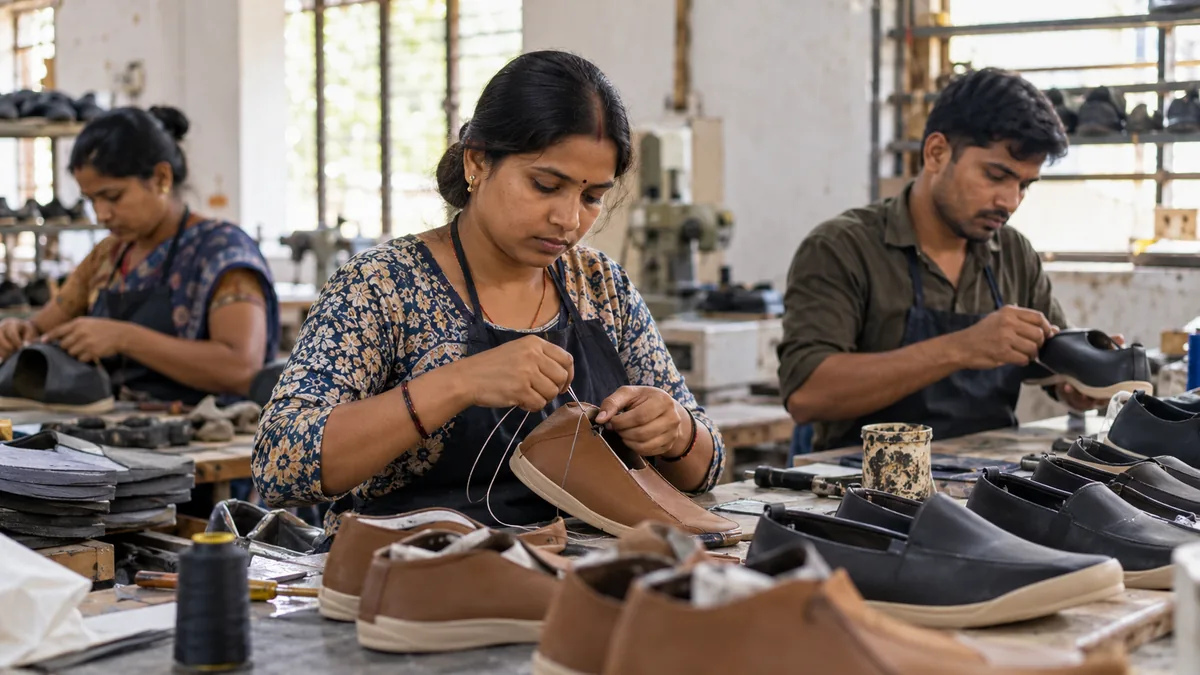
Start with a product brief. A leather formal shoe, EVA slipper, school shoe, safety boot and knitted sports shoe require different machines, moulds, materials and inspection methods. Ask the factory whether it is a direct manufacturer, job worker, trader or a combination. A sourcing office may be useful, but the commercial agreement should identify who controls production and who is responsible for quality.
| Product requirement | Supplier capability to verify | First sample check |
|---|---|---|
| Leather dress shoe | Cutting, stitching, lasting and finishing | Stitch alignment, sole bond, size fit |
| School shoe | Repeat sizing and durable upper/sole | Flexing, abrasion and pair matching |
| Sports or casual shoe | Pattern, lasting, midsole and outsole options | Comfort, bonding and repeatability |
| Slipper or molded footwear | Mould access, material control and cycle capacity | Weight, edges and size consistency |
| Safety footwear | Applicable standard, test records and traceability | Marking, construction and lab evidence |
This is a capability checklist, not a ranking. A factory that makes one category well may not have the tooling or process controls for another. If a new mould is needed, ask who owns it, where it will be stored, which products it can make and how the cost is recovered if the order ends.
What should a buyer ask before requesting a quote?
Send the same request to each shortlisted supplier so quotes can be compared. Include a drawing or reference sample, material specification, size range, expected monthly quantity, target delivery window, packaging and destination. Ask for separate prices for sampling, tooling, production, packaging and freight. “Ex-factory” and delivered prices are not comparable unless the named location and freight terms are clear.
Ask the factory to explain its minimum order quantity by style, colour and size. A headline MOQ can conceal a higher per-colour or per-size minimum. Get the sample calendar and bulk-production lead time in writing. Clarify whether the quoted materials can be replaced if the chosen component is unavailable and require written approval before any substitution.
How can you check a manufacturer’s quality?
Review legal name, GST registration, address, bank account name, invoices and references. Confirm the factory address through an independent visit or a live video walk-through. Look at the actual cutting, stitching, lasting, sole attachment, finishing and packing stages relevant to your product. A polished reception area does not prove that production is done there.
Approve a “golden sample” that both parties sign and date. It should record material, colour, construction, logo placement, insole, outsole, size, packaging and tolerances. A later bulk inspection must compare goods with that reference. For a first order, inspect a pilot lot before releasing full quantities. Record defects by type and severity, not only by a vague pass/fail note.
For products subject to compulsory Indian standards or buyer requirements, check the current BIS scope, licence status and product marking. The BIS compulsory certification list includes several footwear categories under applicable Quality Control Orders. Requirements and implementation dates can vary by product type, so verify the exact standard and notified scope for the shoe you plan to sell. A factory’s claim that it has “BIS” is not enough; ask for the licence number and validate it in the BIS database.
What does a 2026 sourcing budget look like?
There is no dependable all-India per-pair manufacturing price because leather grade, sole, construction, order volume, branding, testing and freight change the quote. Build a landed-cost worksheet instead. Example: if a supplier quotes ₹620 per pair, packaging is ₹28, inspection allocation is ₹12, and inward freight is ₹35, landed cost before tax and selling expenses is ₹695. If a retailer’s planned selling price is ₹1,099, the apparent gross difference is ₹404, but this is not net profit. Marketplace commission, returns, discounts, warehousing and tax treatment still reduce it.
Request three written quotes for the same specification. Compare payment terms and defects allowance as closely as unit price. If the supplier asks for a large advance, tie milestone payments to sample approval, raw-material booking, pre-dispatch inspection and document handover. Do not pay a personal account when the quotation and invoice name a company.
Which compliance and product records matter?
Maintain supplier quotation, purchase order, approved sample photos, material declarations, inspection report, invoice, e-way bill where applicable and transport proof. Confirm GST classification and rate with a tax professional for the specific footwear and transaction. For exports, add destination-country labelling, restricted-substance and buyer testing requirements. Leather and non-leather goods can face different buyer checks.
If products carry a brand or private label, obtain written permission for trademarks and artwork. Keep a record of who supplied the logo file and approved its use. Never ask a supplier to copy another brand’s design or mark. For consumer complaints, batch codes and order records help isolate a production lot and resolve the issue with the factory.
How should a first order be structured?
Keep the opening order small enough to test demand, but large enough for the factory to run the agreed process. Avoid launching many colours and sizes before you know which combinations sell. Use past sales or a limited preorder to estimate size mix. Confirm whether the supplier’s quoted MOQ forces excess inventory and calculate storage cost alongside the unit price.
The purchase order should specify product code, upper and sole material, colour, size ratio, packaging, label, inspection method, acceptable defect level, dispatch date, payment milestones and remedy for non-conformance. Add a clause that material changes require written buyer approval. Keep the sample and a sealed production pair for later comparison.
Track first-order performance: sample-to-bulk match, on-time dispatch, defect rate, size exchanges and landed cost. A low quote that creates rework and returns may be more expensive than a higher, reliable quote. If a factory misses the sample or documentation milestones, pause the next payment and resolve the gap before bulk production.
Before requesting production, ask for the supplier's current capacity and planned factory shutdown dates. A sample room may finish one pair quickly, while bulk production waits for materials, cutting and stitching lines. Ask which operations are performed in-house and which are subcontracted. If stitching or sole attachment moves to another workshop, inspect that location too. Record the answer beside the quote so a second supplier's shorter lead time is compared on the same scope.
A buyer should also define what counts as a defect. Loose threads may be reworkable, while sole separation, wrong size grading or mismatched left-right pairs can make stock unsellable. Agree on inspection sampling and who pays for rework, replacement or return freight before production begins. Keep a dated sample, measurement chart and approved material swatches. A photograph alone cannot capture stiffness, fit or bond strength.
Related reading: our guide to manufacturer due diligence in Aurangabad.
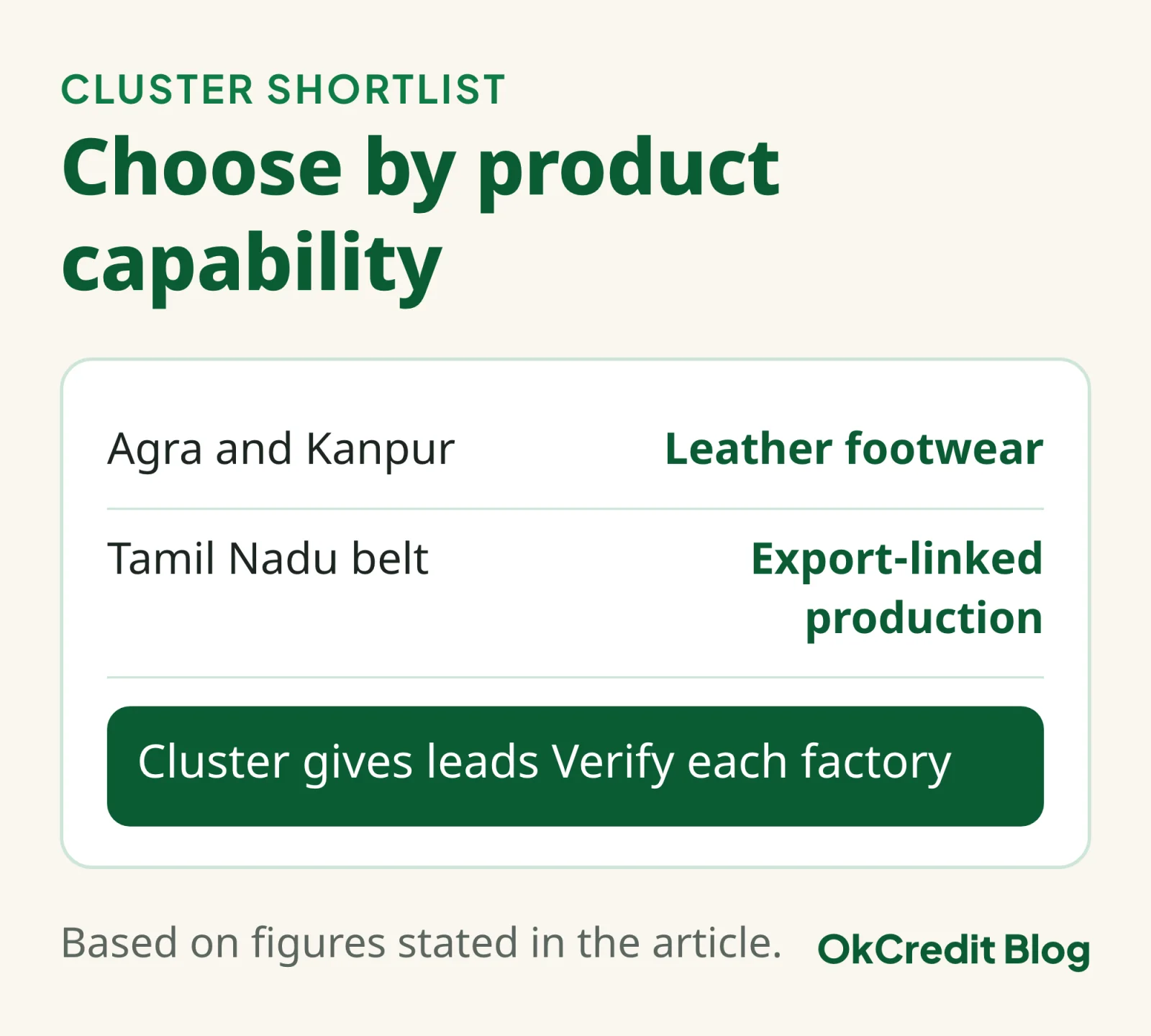
Compare a supplier cluster with the product capability you need.
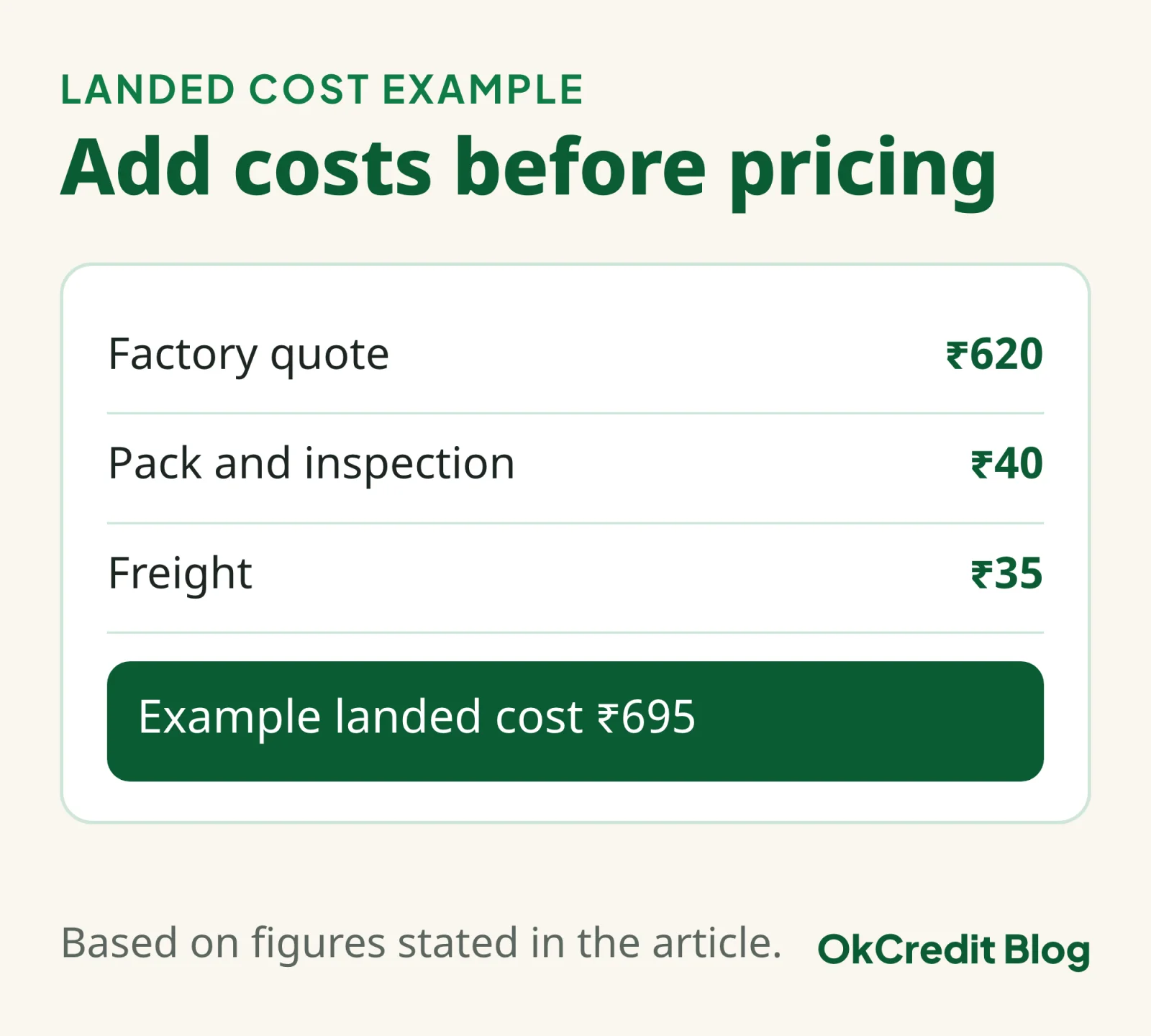
Add packing, inspection and freight to the quoted shoe price.
A short supplier scorecard makes second orders easier. Give each factory a written rating for sample match, document completeness, response time, defect handling, delivery reliability and total landed cost. Keep the first order’s actual defect and delay record beside the score. If a quote falls after you remove inspection or packaging, compare it with the original scope rather than marking it as a cheaper equivalent.
Before placing a repeat order, check the current product standard and the certification status again. Licences and product coverage can change, and a certificate for one model or factory does not automatically cover every shoe in a supplier’s catalogue. Ask for the applicable scope, validity and marking instructions for the exact style.
A buyer’s specification should state how measurements will be taken and what tolerance is acceptable. Ask whether the factory grades sizes from a master last or copies dimensions from an old sample. For shoes, small changes in last shape, toe room or outsole thickness can alter fit even when the label shows the same size. Test a size run across the range before approving the bulk order, and keep fit feedback separate from cosmetic inspection.
Confirm whether the supplier can identify the material and component batch used in each production lot. Traceability helps if an outsole, adhesive or upper material has a defect. Keep the lot number on your inward record and retain one pair from the shipment. If a buyer later reports a problem, you can investigate the relevant production lot instead of stopping every style you source.
Frequently asked questions
Which city is best for sourcing shoes in India?
Agra, Kanpur, Chennai, Ranipet, Ambur and Kolkata are established clusters, but the best city depends on product category, material, order quantity and logistics. Shortlist factories by capability and verify them individually.
How many pairs should I order from a manufacturer?
There is no universal MOQ. It can vary by style, colour, size split, mould and factory process. Ask for the minimum by each dimension and compare it with a small demand test before placing the order.
How do I verify a shoe factory?
Check its legal identity, address, GST details, bank account and invoices. Inspect the relevant production line, approve a signed sample and confirm any required BIS licence against the current official database.
Does every shoe need BIS certification?
Not every category follows the same requirement. BIS compulsory orders cover specified footwear products. Verify the current QCO scope, standard and effective date for the exact product before manufacturing or selling.
What should be in a footwear purchase order?
Include the product specification, material, size ratio, sample reference, packaging, inspection plan, quantity, price, dispatch date, payment milestones and process for defects or substitutions.
Is the difference between factory price and selling price profit?
No. It is only a gross difference before freight, taxes, commissions, returns, warehousing, discounts and operating costs. Calculate landed cost and contribution per pair before deciding the retail price.